On Faculty Compensation and Gender Disparity

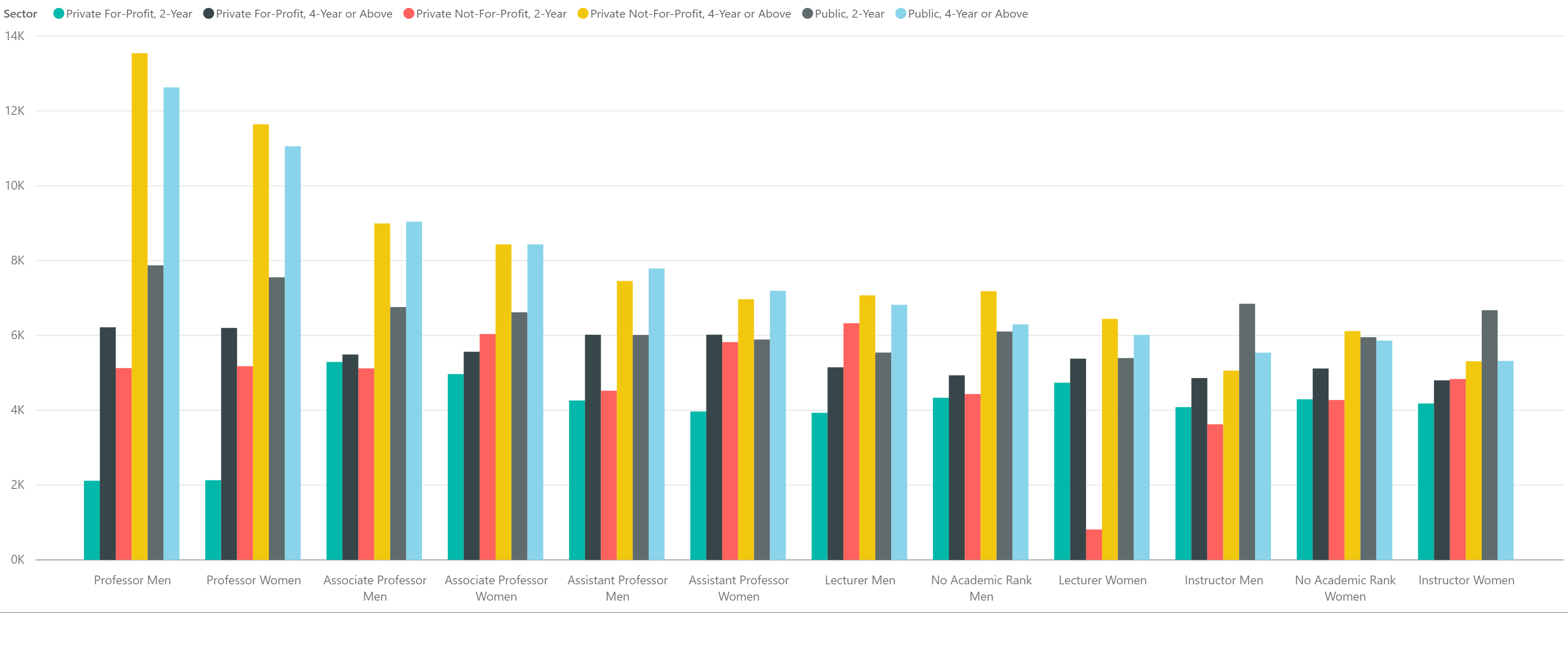
It will take many years for the faculty gender pay gap to close at the current rate of change. From 2014 to 2015, women received around half a percent higher pay increase from men over the various institutional sectors. There is still a 16% and 14% gender pay gap for full professors at private non-profit 4-year institutions and public 4-year institutions respectively.  


The pay gap however is not universal or as acute. Public 2-year institutions have a much lower pay gap at between 2 and 4% across all ranks. For private non-profits, women on average earn more than men at the assistant and associate professor rank at 2-year institutions and about the same at 4-year institutions. We used the Public Insight Staffing and Compensation Interactive to crunch the numbers as summarized in the graph below.


Share This Story

Similar Posts

  • Black Disparities in Premature Death

    County Health Rankings has always used Premature Death as a measure in deriving its ranking formula. Years of Potential Life Lost Before Age 75 (or YPLL) counts as 50% of the Health Outcomes score. Every death occurring before the age of 75 contributes to the total number of years of potential…

  • Breaking Down Net Price, Tuition, and Aid

    Reports by College Board and others have indicated that net price, the true measure of what a student pays to attend college, continues to rise. College Board has maintained that the actual net price has been increasing for six to eight straight years.    Net price is defined as the…

  • The Gender Debt Disparity

    The Huffington Post recently posted a very interesting article on gender debt disparity. The article notes that women hold nearly two-thirds of all student debt – a whopping $833 billion dollars. The article postulates that women also take longer to pay off the debt because they earn less than men….

  • Regional Variations in Opioid Prescribing Rates

    Given the state of the opioid crisis, any meaningful data is valuable. So when CMS released three years of Opioid Part D prescription data in November, we all rejoiced. CMS also released a mapping tool to analyze the data. While mapping tools can be effective, they can also get in…

  • Maternal Care and Rural Counties

    An interesting study published in the September issue of Health Affairs found that 9 percent of rural counties experienced the loss of all hospital obstetric services in the period 2004–14. In addition, another 45 percent of rural US counties had no hospital obstetric services at all during the study period. We…