Degrees, Jobs, and Crosswalks

My daughter has a Bachelor’s Degree in Fine Arts with a concentration in Cartooning and Illustration. Today, she is a quality assurance manager for a software company. I am very glad that her career has morphed into a burgeoning field because it was very clear to me that it would be very hard to get a job in her chosen field.


Program development requires a knowledge of the jobs that employ them. A “crosswalk” attempts to match up one type of database element to another. That is not always easy because jobs can deploy multiple degrees. A degree can result in multiple jobs and a single job can come from multiple degrees. In database terminology, it is what we call a many to many relationship.


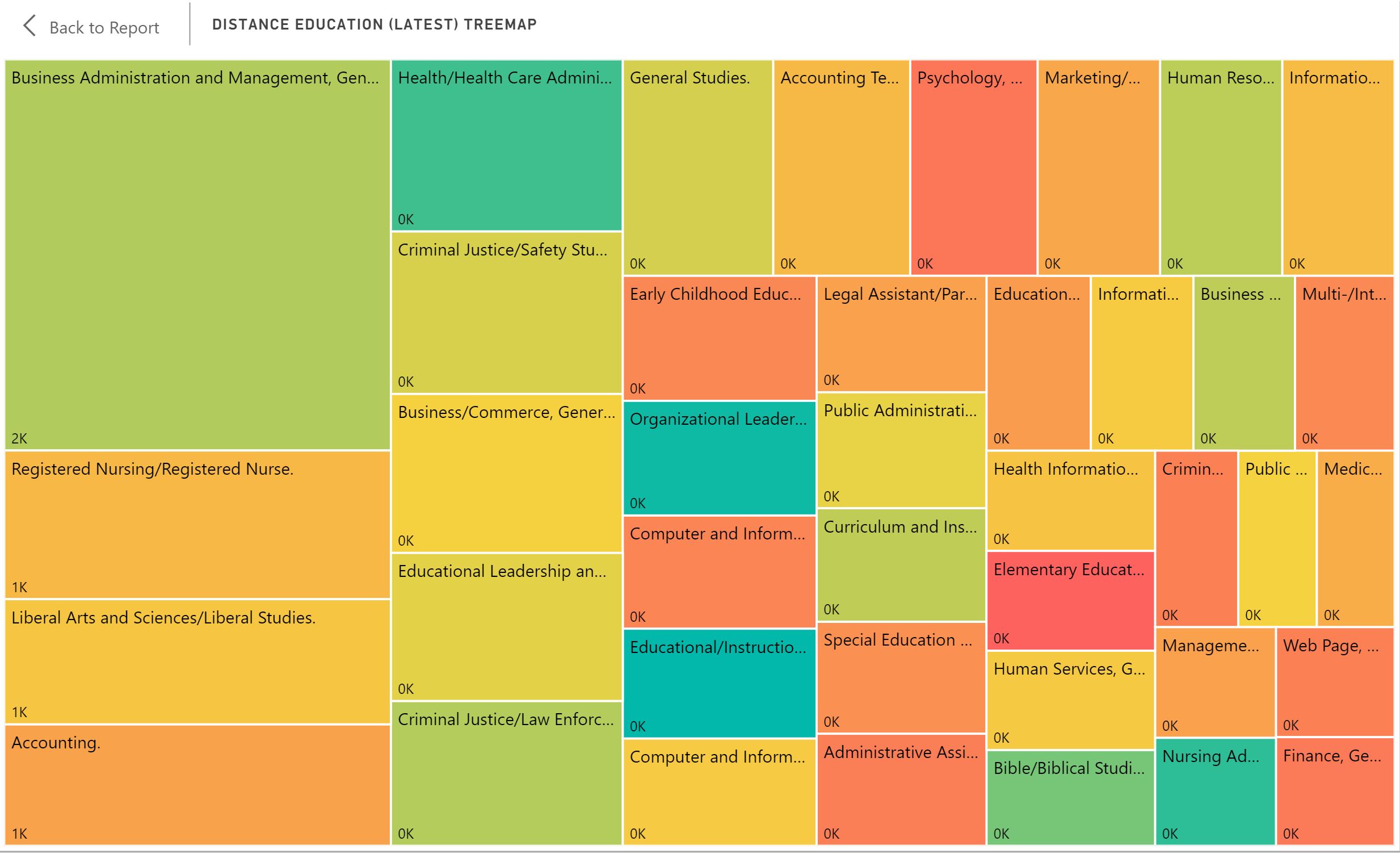
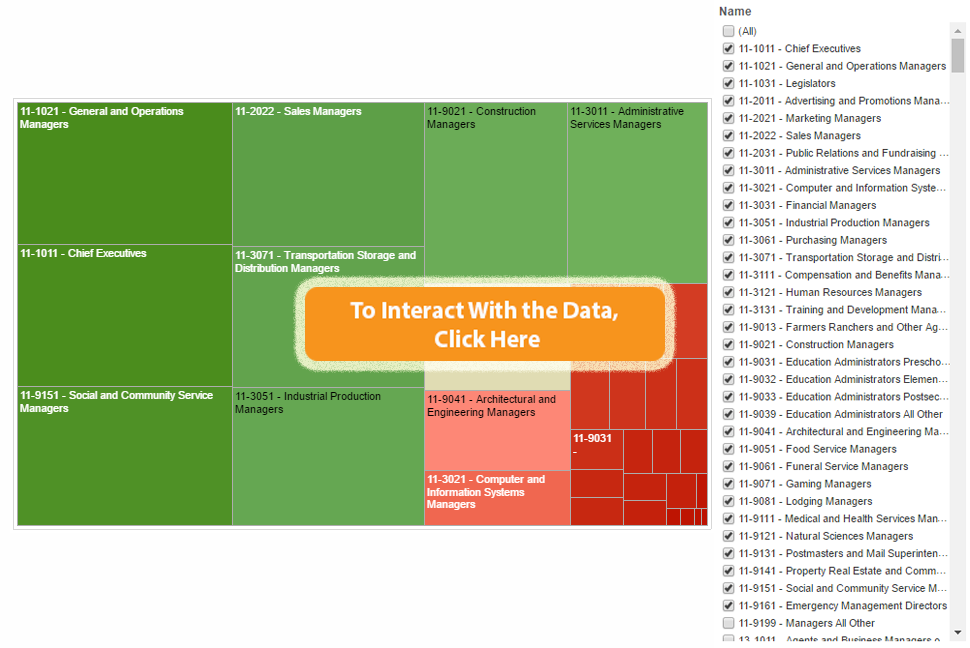
We have deployed a crosswalk in Public Insight that matches up jobs by Standard Occupational Classification (SOC) to degrees awarded by Classification of Instructional Programs (CIP). To find which jobs are moving which degrees, we created a treemap visualization in Tableau Public , which you can access by clicking HERE. The degrees awarded need to be looked at proportionately and a treemap is perfect for this. You can select the individual job codes by six digit SOC code and see proportionate degrees to other SOC codes. For example, we plotted all managerial jobs which begin with SOC code 11 and find Industrial Management jobs are almost three times more relevant in degrees awarded than Computer and Information System Managers. To interact with the Tableau visualization, click HERE.


Share This Story

Similar Posts

  • Maternal Care and Rural Counties

    An interesting study published in the September issue of Health Affairs found that 9 percent of rural counties experienced the loss of all hospital obstetric services in the period 2004–14. In addition, another 45 percent of rural US counties had no hospital obstetric services at all during the study period. We…

  • COVID-19 Dashboard with NYT Data

    Analyze COVID-19 Cases by National, State and County Level It is important for today’s business leaders to consider the impact of COVID-19 when making decisions and allocating resources. The accuracy of COVID-19 data reported by news sources and online publications goes beyond the numbers themselves, the interpretation of the statistics…

  • Friendly Skies Just Got Friendlier

    Airlines have taken it on the chin in recent months for bad customer service. This despite the fact that overall customer service rankings of the airline industry are up. Flight attendants received nearly a 14% bump in pay based on a comparison of mean wage data from the 2016 Occupational…

  • Where the Vets Live

    As we approach this Memorial Day Weekend, we pause to remember the sacrifice made on our behalf by our veterans. Nationwide veterans comprise 8% of the population. But there are clusters of populations where veterans comprise much higher percentages of the population. This article from Trulia published in Forbes back…

  • 12 Colleges with Sustained Enrollment Growth

      According to data collected from the Integrated Postsecondary Education Data System (IPEDS), 60.6% of colleges experienced flat or declining enrollment growth while only 39.4% experienced increasing enrollment growth from 2013-2014. This is also very consistent with statistics from 2012-2013.   College enrollment growth may be hard to sustain and…

  • What are Five Star Hospitals?

    Consumer ratings are always controversial. You can always ask the wrong question or ask the right question the wrong way. In an attempt to shed transparency on our nation’s healthcare system, the Centers for Medicare and Medicaid Services (CMS) instituted the star ratings system. CMS’ star-rating system is meant to…