Has Distance Education Hit Its Peak?

Programs offered through distance education or what we might conventionally refer to as online programs actually declined as a percentage of all programs from 10.8% to 10.5% in 2017 and 2016 respectively. This was the first time that distance education has actually declined since this data started being collected by IPEDS in 2013. Further, the number of programs being offered by institution and 6 digit CIP combination declined from 21,748 to 21,339. Not much of a decline, but a decline nevertheless.


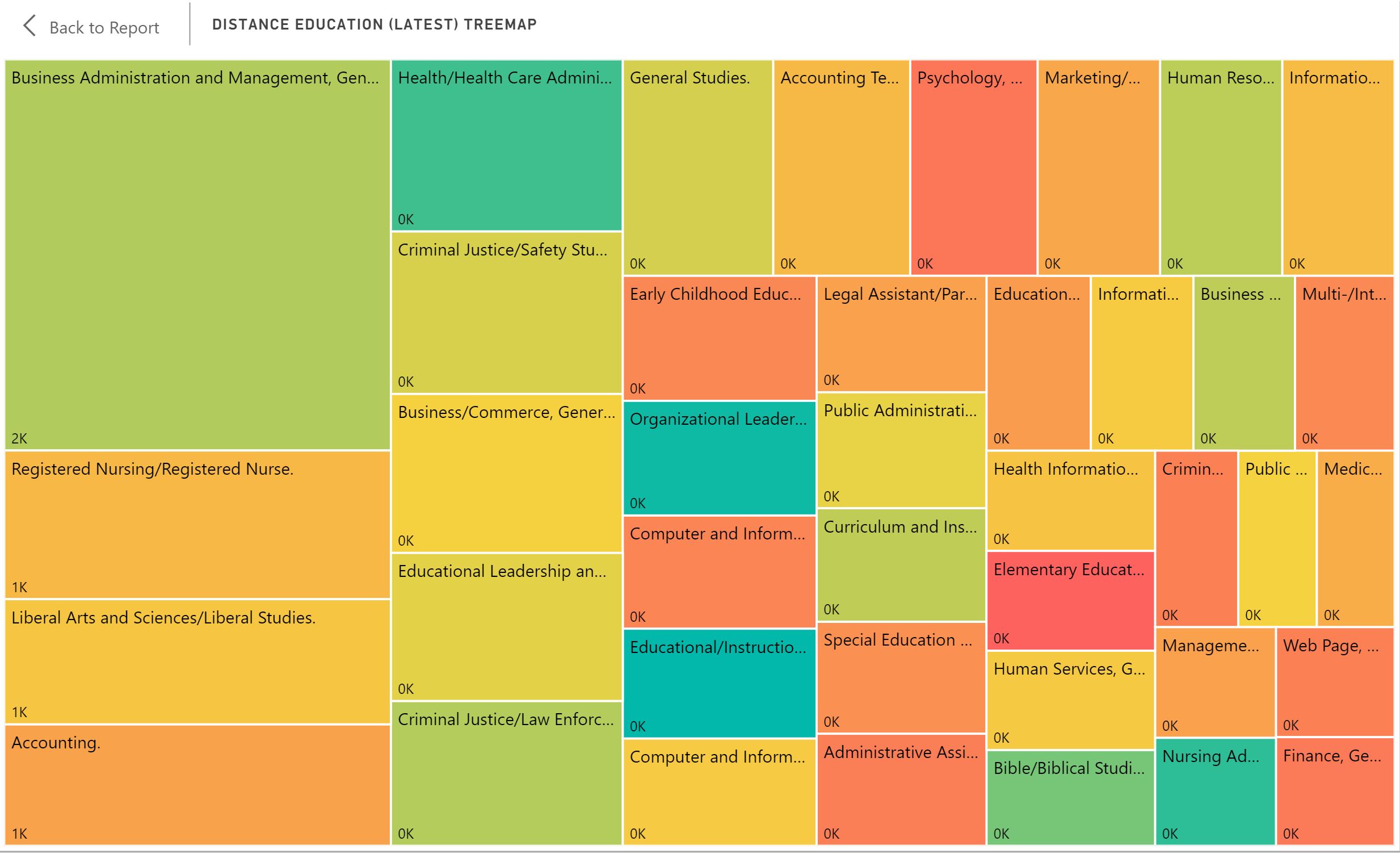
It appears that the original lure of distance education seems to have worn off somewhat and whatever works, works well. Whatever is not working is being phased out. Business Management continues to have the highest absolute number of distance education programs, but it is not the highest percentage of programs. The highest percentage of programs offered through distance education is in Organizational Leadership and Educational/Instructional Technology at over 34%. Nursing Administration and Health Care Administration are also high concentrations of distance education at around 31%.


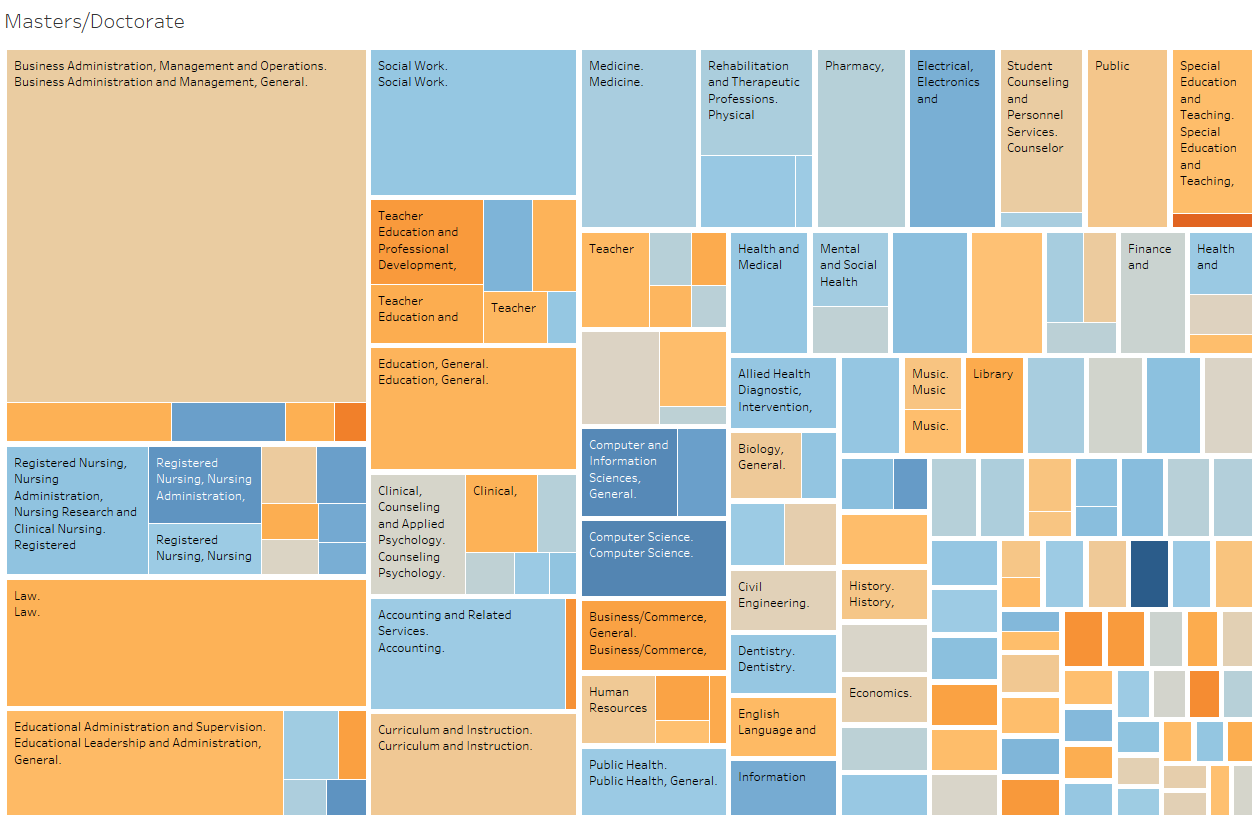
The treemap below shows the distribution of the largest distance education programs (screened for minimum of 150 programs). The size is the raw number of programs while the color is the percentage offered through distance education (blue being highest and red being lowest on diverging scale). 


Share This Story

Similar Posts

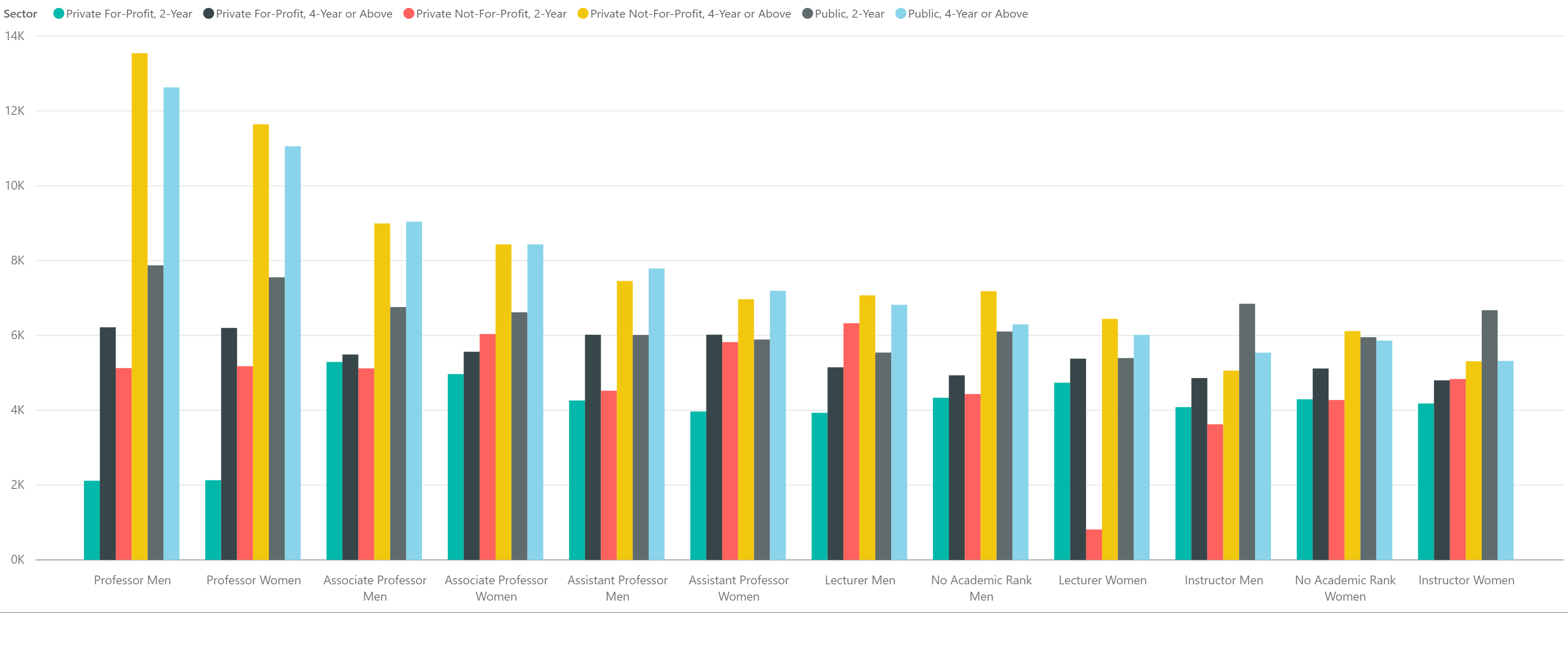
  • On Faculty Compensation and Gender Disparity

    It will take many years for the faculty gender pay gap to close at the current rate of change. From 2014 to 2015, women received around half a percent higher pay increase from men over the various institutional sectors. There is still a 16% and 14% gender pay gap for full professors…

  • What do Sierra Vista and Hinesville Have in Common?

    Sierra Vista, AZ and Hinesville, GA probably don’t seem to have much in common. One is in eastern Arizona and the other is in southeast Georgia. They are both very small cities with populations of around 40,000. What they have in common is a market concentration for computer occupations with…

  • Visualizing Student Debt and Earnings

    Leveraging Scatterplots to Analyze the New College Scorecard Data There has always been a symbiotic relationship between student debt and student earnings. As student debt has creeped up in recent years, there has also been a data gap with post-graduation earnings. The most recent College Scorecard data is a first…

  • Are Outpatient Imaging Quality Measures Effective?

    CMS began developing measures evaluating imaging efficiency back in 2007. These performance measures have been distributed as part of Hospital Compare for the past four years. Lower percentages suggest more efficient use of medical imaging. The purpose of reporting these measures is to reduce unnecessary exposure to contrast materials and/or…

  • Endowments per Student Down in 2016

    How financially fit is your institution? One of the measures that Forbes has used in assessing the financial fitness of postsecondary institutions is endowment assets per FTE. This metric takes the value of endowment assets at the end of the year and divides it by the number of FTE’s. In…