The sticker pricing game has been in place a long time. No one ever pays full sticker price for items such as jewelry or cars. That is probably why University of Michigan came under scrutiny for its free tuition guarantee for families with income under $65,000. Cynics pointed this out as simply marketing hype.
It is hard to single out one line item like tuition in the overall costs of attendance. After all, costs of attendance are tuition plus expenses less grant and scholarship aid. Free tuition could be merely moving dollars from the discount bucket (i.e. aid) to the gross bucket (i.e tuition). Postsecondary institutions have longed been required to disclose net price and provide a pricing calculator on their web site.
The new Public Insight Tuition and Pricing Interactive is designed to analyze the components of net price for the entire landscape of postsecondary institutions. Fees such as books and supplies, and room and board can range very widely.
-
On-campus expenses for University of Michigan are $13,956 compared to the average annual tuition of $14,401 for in-state students.
-
The average scholarship and grant aid for all students is $11,109.
-
However, the average for students with family income of less than $75,000 is $20,271.
So the grant and scholarship aid is actually greater than average annual tuition. In fact, tuition is becoming far less of an issue when factoring in the costs of education. In-state institutions such as Michigan have provided nearly 6.3 billion in total scholarships and aid for the year ended August, 2015 a jump of 6.4% in the past two years. Tuition during the past two years have been relatively flat during the period.
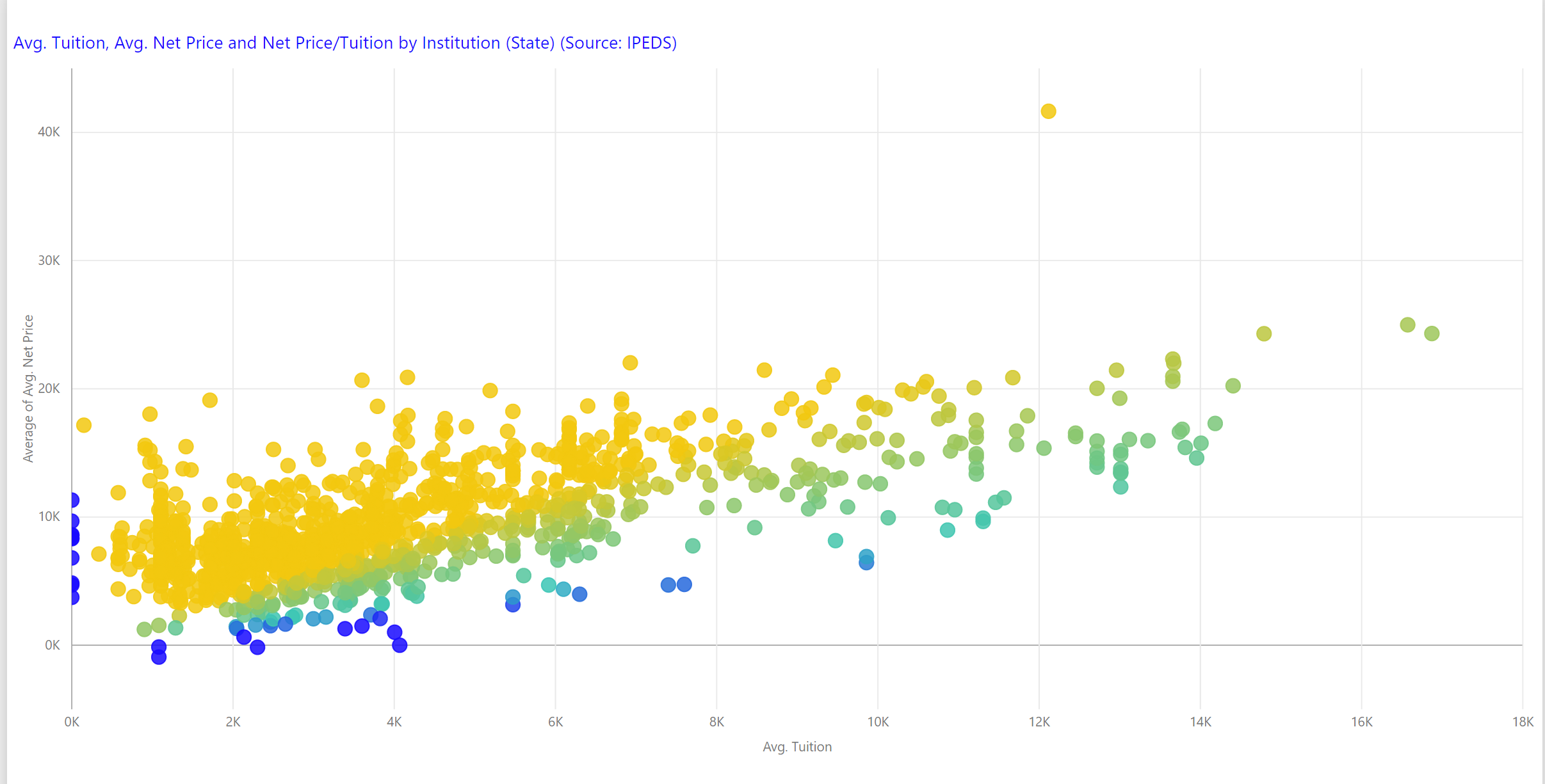
The scatterplot below shows state institutions net price against tuition. The institutions in gold have a higher net price than tuition meaning the costs of expenses exceed the scholarship and grant aid. While free tuition may be a matter of moving money around, it also could usher in a world of more transparency around the actual costs of attendance.