Self-Funded Research Remains the Trend in Higher Education

Research and development expenditures continued their flat growth since 2011 according to the most recent data from the National Science Foundation Higher Education Research and Development Survey (HERD). Research expenditures increased 1.66% for all reporting institutions from 2013 to 2014 and have increased cumulatively only 4.76% since 2011.

 
The primary source of funding, federal expenditures, has declined nearly 6% since 2011. In addition, state and local and nonprofit funding have also remained flat during that same period. To make matters even worse for institutions, The American Recovery and Reinvestment Act of 2009 (ARRA) lapsed in fiscal 2014. Institutions received nearly $11 billion in stimulus dollars under this program since 2010. Institutions have made up the difference through self-funded initiatives. Institutional funding now represents 23.60% of all research spending compared to 19.26% in 2011.


We have summarized research expenditures by institution going back to 2003. Johns Hopkins remains the leader in research expenditures with over $21 billion dollars since 2003, nearly 69% higher than the nearest rival, The University of Michigan. The top 25 institutions represent 35% of all of the research expenditures since 2003.

 
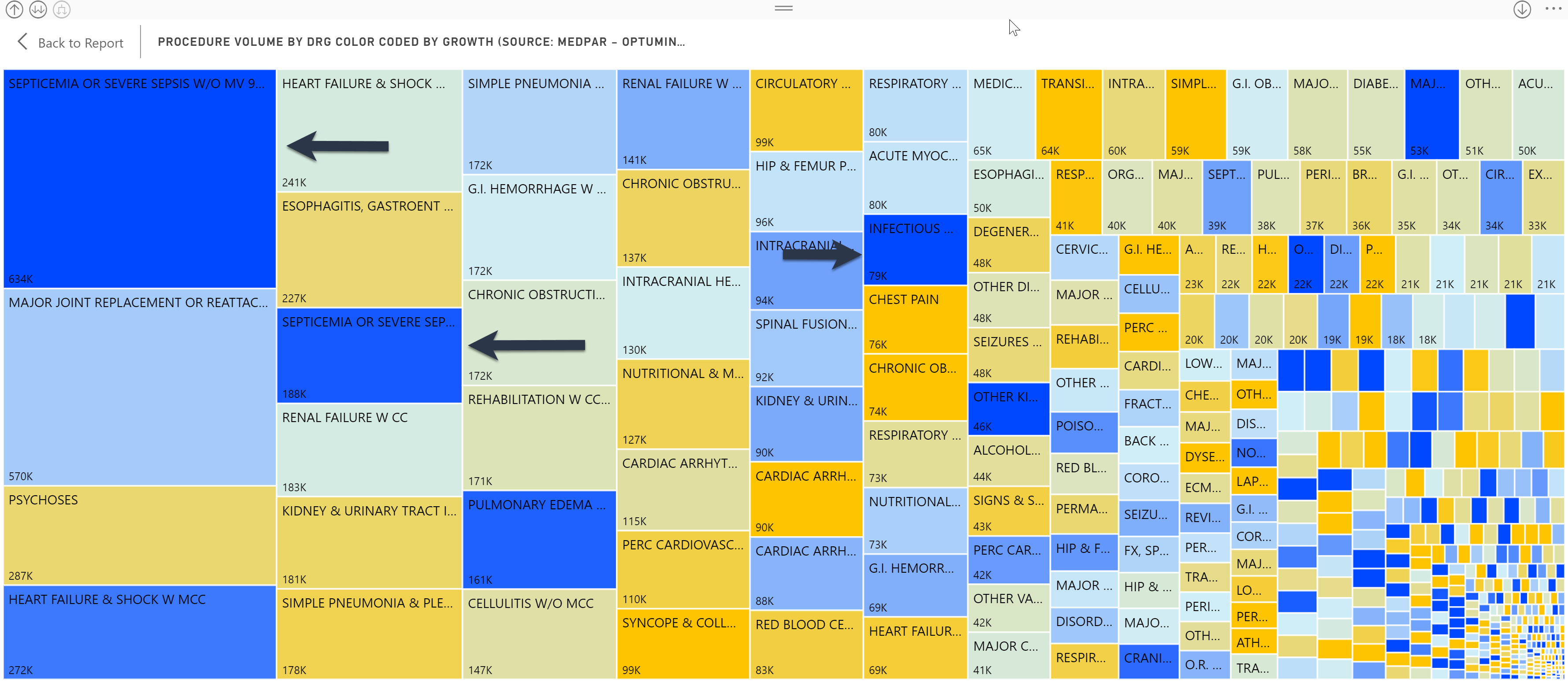
National Science Foundation data is available for free by institution in Public Insight. You can also download the complete list of expenditures by institution by year and source by clicking HERE. We have also provided a treemap showing visually the breakdown of 2014 data by institution. 
 

Share This Story

Similar Posts

  • Black Disparities in Premature Death

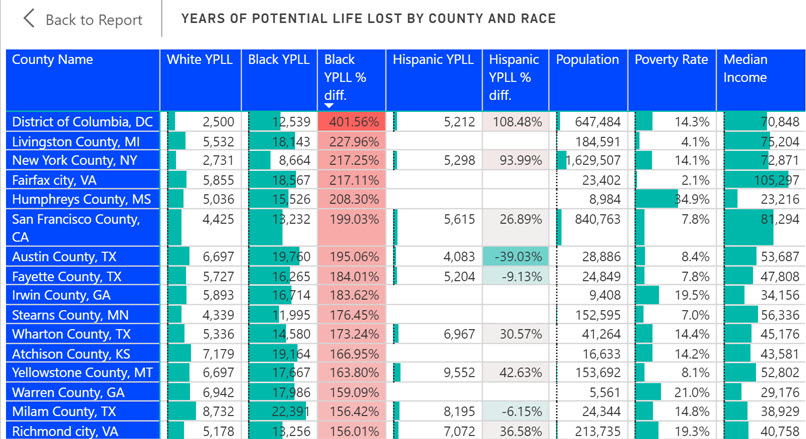
    County Health Rankings has always used Premature Death as a measure in deriving its ranking formula. Years of Potential Life Lost Before Age 75 (or YPLL) counts as 50% of the Health Outcomes score. Every death occurring before the age of 75 contributes to the total number of years of potential…

  • Death Rate Continues to Inch Up

    The mortality (or death) rate increased nominally from 2016 to 2017 going from 844 to 849 deaths per 100,000. This probably is not earthshaking news but based on the overall crude rate, it has actually been increasing since 2009 as noted by the following graph.   Advances in medical care…

  • Will Voter Unpredictability Continue in 2018?

    Much has been written about the increased polarization of America and its collective impact on communities. There were many surprises in the 2016 election and people are bracing for a potentially tumultuous 2018 mid-term election. Ohio, where I live, is one of the swing states. The average county in Ohio…

  • Lower Student Default Rates – Calm Before the Storm?

    Loan repayment rate data may trigger resurgence in default rates The most recent Federal Student Aid student default rate data indicates that the composite student default rates declined from 10.8% in 2015 to 10.1% in 2016, a decline of 6.5% and continuing a seven-year post-recession trend. In 2010, the default…

  • Student Debt Rises 13%

    The newest College Scorecard data released several weeks ago reveals an ongoing trend in student debt. The median student debt increased 13.1% from 2015 to 2016. The median student debt has now more than doubled since 2007 as shown by the following graph. We calculated this using a weighted average…

  • Using AI to Break Down Head Count

    New Microsoft® Power BI Visual Dynamically Analyzes Categorical Data Like fashion goes in and out of style, so do visual ways of exploring data. Several decades ago I worked with a visual called the Decomposition Tree from an upstart company Proclarity from Boise, Idaho to analyze multi-dimensional data. That company…