Students Increasingly Opting for High Cost Debt

Many prognosticators are projecting a coming economic crisis caused by student debt. This is typically focused around an inability to pay off the principal of the loan. But it really appears that we are also setting ourselves up for a real problem with the cost of debt. 


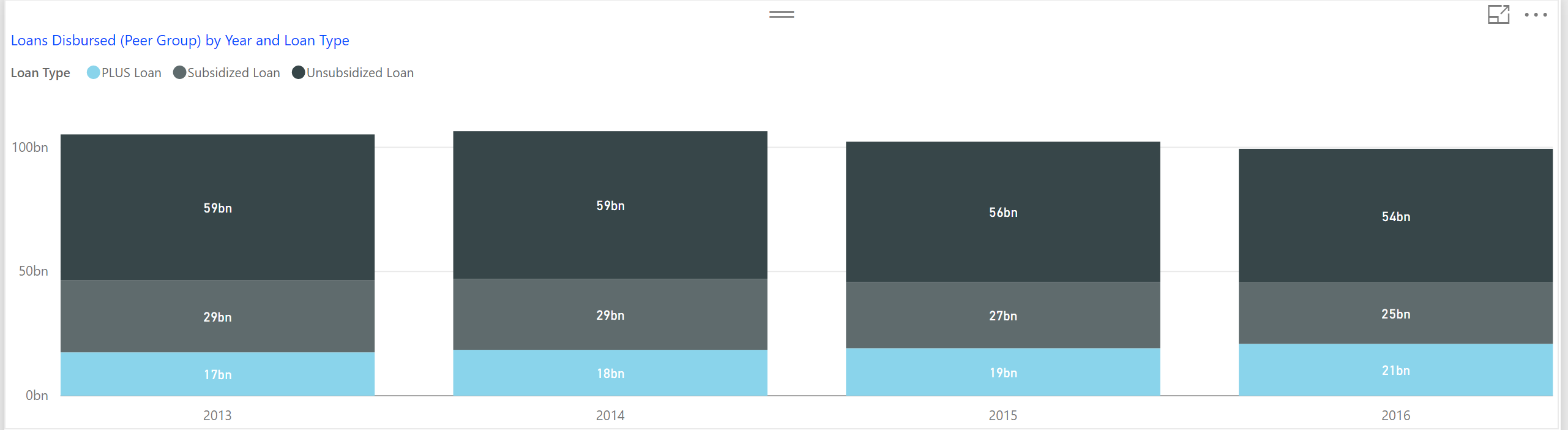
Overall new loans from the direct loan program have been relatively flat for the past four years except the loan programs are increasingly shifting to higher cost PLUS loans as indicated by the following graph.


Unsubsidized and subsidized loans have declined while PLUS loans continue to increase. Why is this a problem? Because PLUS loans carry much higher interest rates. The new PLUS loan rate effective July 1, 2017 is 7% compared to the unsubsidized and subsidized loan rate of 4.45%. This incremental debt cost is monumental when looking at it over the lengthy repayment cycles of student loans.


And it seems like it is getting worse. We extrapolated the direct loan program costs through June 30, 2017 by taking the actual through March 31, 2017 and adding last year’s fourth quarter ending June 30, 2016. The results if they hold are very alarming. PLUS loans will have increased nearly 6% and the number of PLUS borrowers will have increased 12%.


Unfortunately students have the perspective the PLUS loans are essentially free money. There is also the perspective that sometime down the line, these loans will be forgiven. This recent article in Forbes highlights that concern. 
Share This Story

Similar Posts

  • The Race for Nurses

    There is a race that is brewing between millenials who are becoming registered nurses and the hiring that has started at U.S. hospitals. A Health Affairs study concluded that Millennials are becoming registered nurses at nearly twice the rate of baby boomers, but that still won’t necessarily prevent a nursing shortage…

  • Regional Disparities in Health Insurance

    We all know that health insurance is a moving target. According to the most recent ACS survey data, the national uninsurance rate declined from 13.0% to 11.7% in 2016. Public insurance coverages increased slightly more than private coverages (increases of .9% and .6%) respectively. This change was short-lived as Gallup…

  • BLS Releases New 10-Year Employment Projections

    Last month, the Bureau of Labor Statistics released its 10-year employment projection data. This data is updated every other year. The new data shows a projected increase over the next decade of 7.4% which is a noticeable increase over the previous 6.5% 10-year projections in 2014. These projections are not…

  • Rural Hospitals are Five-Star According to CMS

    Los Angeles County, CA and Cook County, IL (Chicago) have 117 CMS rated hospitals between them and over 15 million residents. Yet, there is not a single five-star hospital in either county. In this mini-series, we have examined the profile of the current 188 five-star hospitals as it marks its…

  • CMS Introduces New Hospital Returns Measure

    The most recent batch of Hospital Compare data has expanded the whole area of readmissions, returns, and deaths. There are now separate measures for mortality rates, readmissions, and hospital returns. The hospital returns measure is brand new, with the most recent data through June 2016, and applies to heart attack…

  • Infection Rates and the Long-Term View

    My Cleveland Indians have now won 13 games in a row. That along with their overall record and stellar play over the entire season tells me they are a good team. However, at any given point the Indians or any particular player could play really poorly. The similar challenge with…