Rural Hospitals are Five-Star According to CMS

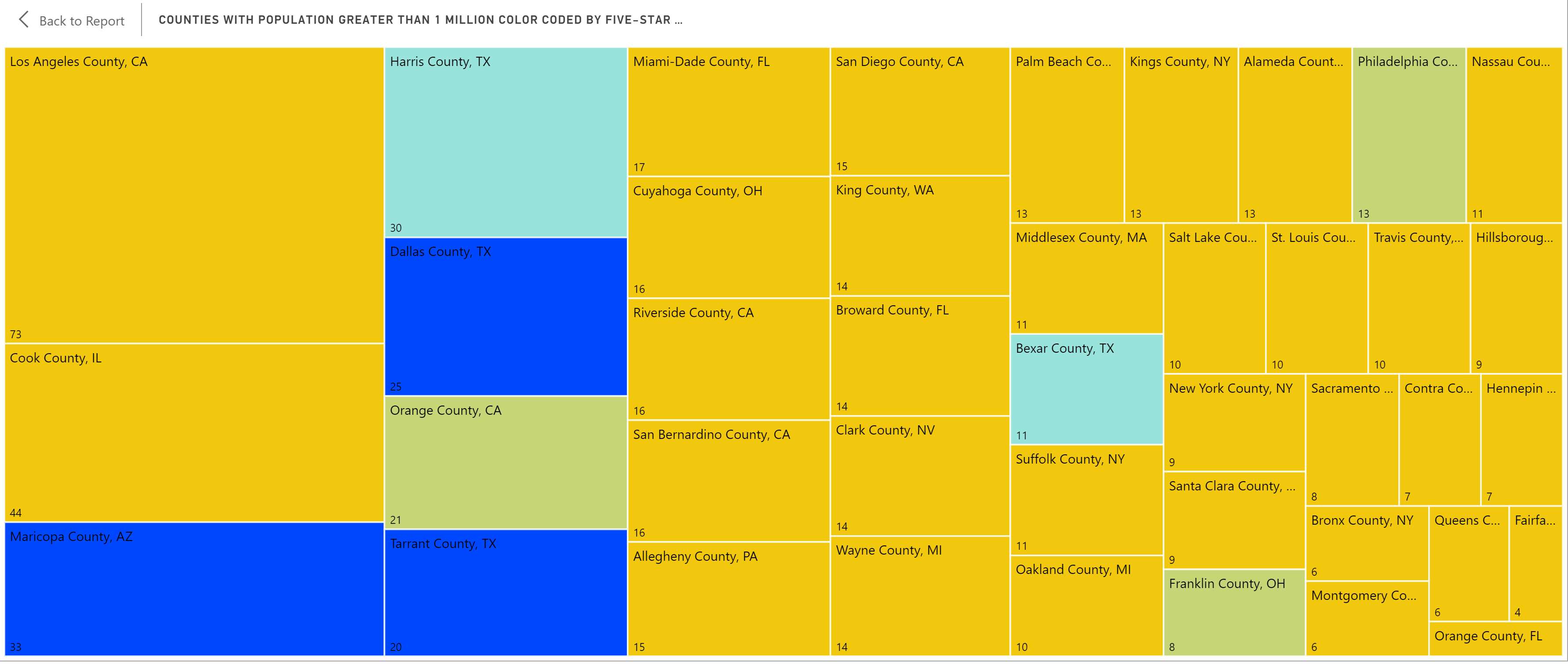
Los Angeles County, CA and Cook County, IL (Chicago) have 117 CMS rated hospitals between them and over 15 million residents. Yet, there is not a single five-star hospital in either county. In this mini-series, we have examined the profile of the current 188 five-star hospitals as it marks its one-year anniversary. Last week, we looked at the characteristics of the five-star hospital and found that they are small and privately owned.  This week, we added county census data to the mix again using the Consumer Assessment (HCAHPS) Interactive


Of the 188 five-star hospitals, 74 are critical access hospitals, which by definition are rural hospitals. In fact, 16% of all critical access hospitals are five-star hospitals compared to just 3.7% of acute care hospitals.  The following tree map shows the breakdown of hospitals by county for every county with a population of greater than 1 million residents. The gold color indicates the absence of a single five-star hospital (blue indicates two or more). A quarter of the U.S. population is represented here and there are a total of 17 five-star hospitals.


I live near Cleveland, Ohio, home of Cleveland Clinic and University Hospitals, two world-class hospitals. Yet the areas around these two great health facilities are far from healthy. Cuyahoga County, where I live is ranked by County Health Rankings 85th out of 88 counties for physical environment and 75th for quality of life. The urban hospital may carry the complex challenges of its environment.  
 

Share This Story

Similar Posts

  • Diving Deeper into Opioid Prescriber Data

    Last week we introduced the new CMS opioid data set and what it means. This data tries to initiate transparency around this hot topical area even though Part D Medicare claims may not be the best proxy of all opioid prescription activity. There are three elements to this data: Part…

  • CDC Publishes 2016 Natality (Births) Data

    The CDC recently released updated Natality (Births) data for 2016. State laws require birth certificates to be completed for all births, and Federal law mandates national collection and publication of births and other vital statistics data. The National Vital Statistics System provides access to statistical information from birth certificates and CDC makes…

  • Distance Education Programs up 8.2%

    Distance Education continues its upward climb according to the most recent distance education data from IPEDS. The number of programs increased 8.2% in 2016, but this increase was less than the whopping 12.6% in 2015. There are now over 29,000 programs offered through distance education. Certificate programs continued their strong…

  • Distance Education Rebounds

    Distance Education is now 12.3% of all programs and up 7.6% in 2018 Social distancing, at least for now, is the new normal and along with it comes distance education. Each year we look at what the data is telling us for distance education programs. Last year, I suggested that…

  • Villanova vs. Michigan in Athletic Costs

    Villanova clearly dominated Michigan on the basketball court and has now won the NCAA Men’s basketball tournament two of the last three years. But how has that success translated to other sports and to the athletic costs in general.    The Equity in Athletics data is released annually by the…