How Healthy Are U.S. Hospitals?

If we said that 20% of any industry was at financial risk, we would all be up in arms. However, a recent Morgan Stanley report citing that statistic was met with some degree of yawning. The report cites that 450 hospitals are at risk of closure and another 600 are “weak”. 


With over 90% of hospitals now having reported financials to Centers for Medicare & Medicaid Services (CMS through HCRIS) for 2017, we took at look at the median financial metrics across the industry and are finding some alarming results:

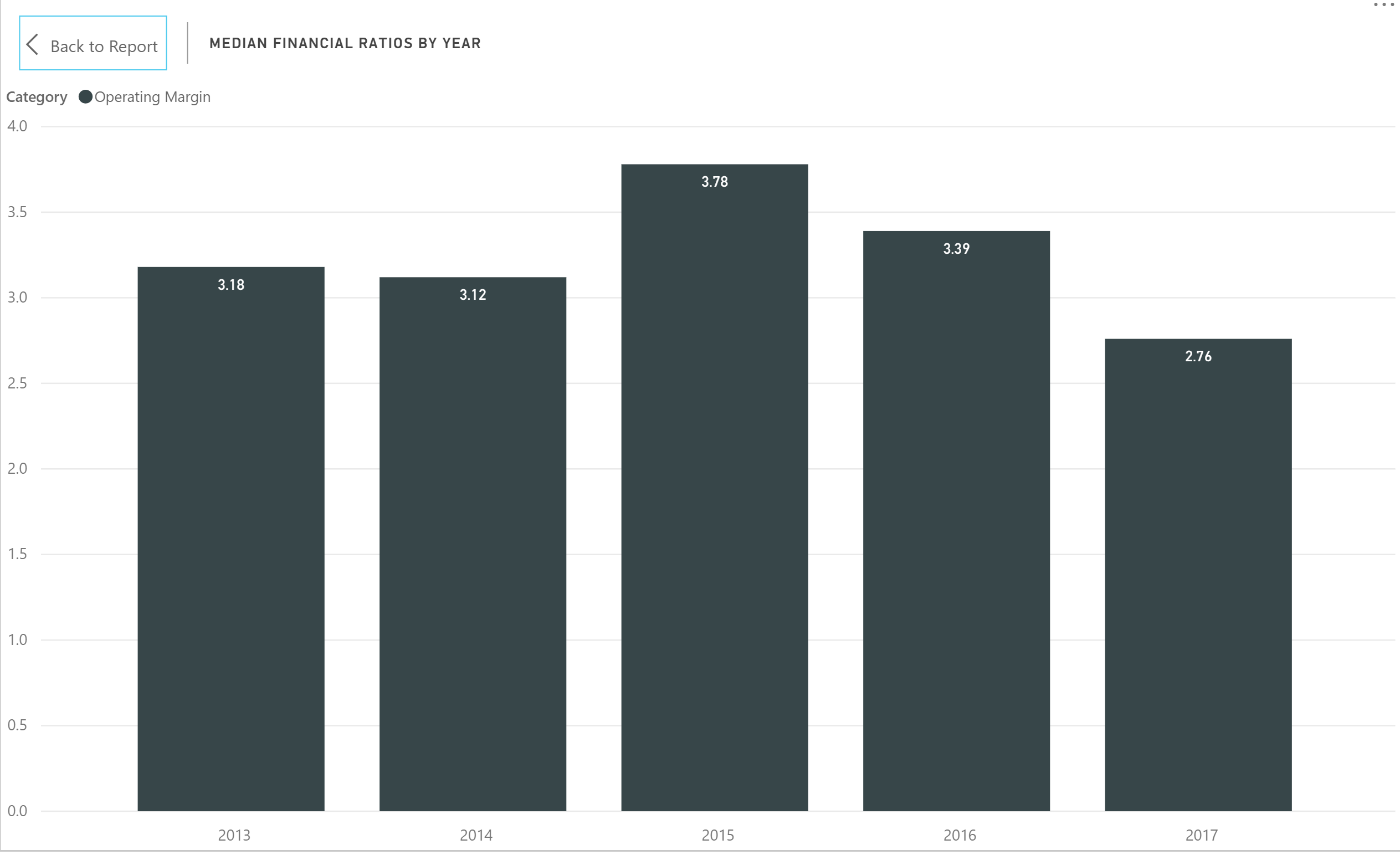
  • Operating margin declined from 3.39% to 2.76%, a five year low (see image below).

  • Days cash on hand has dwindled to 26 days, a decline of 13% since 2013 with days cash on hand from short-term sources declining even further by nearly 30% to just over 10 days.

  • Fixed asset financing is also at a five-year low. One of the benchmarks of the Morgan Stanley report was a lack of capital improvements in the face of a need for increasing capacity.

  • On the positive side, the average payment period continues to decline and is also at a five-year low of 48.4 days.

The recently released Insight for Healthcare Interactive provides rapid insights into the healthcare provider ecosystem. The Advanced and Master versions contain financial and utilization metrics for over 7,000 hospitals with filters for geographies and hospital attributes.  


Share This Story

Similar Posts

  • Student Earnings Experience a Sluggish Recovery

    College students are earning 8% less in 2013 than in 2008 per the most recent data published by the US Department of Education College Scorecard database. Students earned $31,382 in 2013 compared to $34,119 in 2008. The earnings were ostensibly flat from 2012 earnings of $31,528.   The College Scorecard…

  • Nursing Home Coverage of the Elderly

    While long-term care services more than the elderly, approximately 63% of residents are 65 or older. According to the Administration on Aging, population 65 years or older will increase from 14.1% of the population to 21.7% of the population by 2040. As the population ages over the course of the…

  • Is There an Oasis in the New Food Data?

    The recently released updated Food Environment Atlas data by the USDA give us a real glimpse into the progress that we as a nation are making on combating food deserts. The USDA defines food deserts as lack of access to a healthy food retail outlet (a supermarket or large grocery store)…

  • Distance Education Programs Growth Up 18%

    After a few weeks break, we are back with this week’s edition of the Insight for Education blog. In my previous blog on distance enrollment, we cited that distance enrollment exclusive growth was up nearly 15% and more and more schools were offering distance education. In this analysis we wanted…

  • Regional Variations in Opioid Prescribing Rates

    Given the state of the opioid crisis, any meaningful data is valuable. So when CMS released three years of Opioid Part D prescription data in November, we all rejoiced. CMS also released a mapping tool to analyze the data. While mapping tools can be effective, they can also get in…

  • The States That Send Students Elsewhere

    IPEDS reports residency numbers for first-time undergraduates by state. This data can be challenging to work with from several perspectives. It is not collected every year by every institution and it does not summarize the students coming from out of the state of the institution.     The Enrollment Suite…