Will Voter Unpredictability Continue in 2018?

Much has been written about the increased polarization of America and its collective impact on communities. There were many surprises in the 2016 election and people are bracing for a potentially tumultuous 2018 mid-term election. Ohio, where I live, is one of the swing states. The average county in Ohio changed nearly 8% (based on election over election % change) in the 2016 presidential election to Republican but this is a reversal of the 8% movement towards Democrat in the 2008 election. Are voters fickle or are traditional parties becoming less dominant?


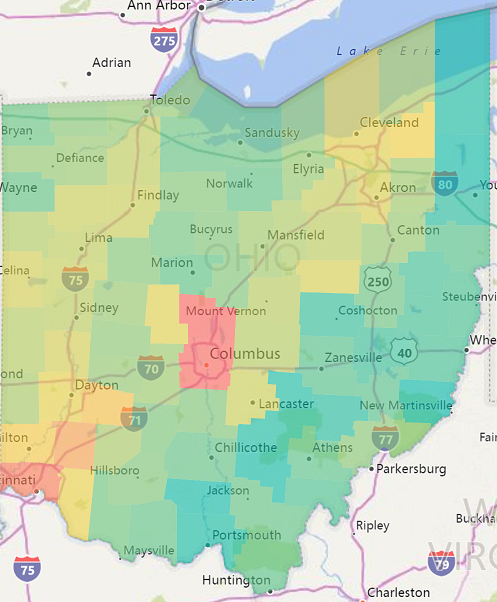
The map below shows the movement from Democrat to Republican (shift is in blue) from 2012 to 2016. No big surprise there, but the map following shows the same movement from Democrat to Republican (shift is in red) from 2004 to 2008; in essence the big reversal. Some counties stayed and moved within their dominant party (e.g. Franklin County), but most simply swung heavily from one party to the other.


2016 Election


2008 Election


So what does that have to do with communities? Voter data is increasingly in the conversation when it comes to community health, planning, and economic development. We are pleased to announce the immediate availability of the Leip Atlas of U.S. Presidential Elections data through the Public Insight On-Demand Data Service. Dave Leip has been a leading authority on election results since 1992 and is frequently cited in many healthy communities analyses. The data includes president, governor, house, and senate election results as well as voter registrations and, where available, voter participation. You can download this data at a state or county level.   
Share This Story

Similar Posts

  • March Madness and the Top Line

    Everyone has caught March Madness fever. The first two rounds of this landmark tournament sparked more double digit seed upsets than any other year. Yet as we sit here for the sweet 16, all of the number one seeds advanced. It is no surprise to anyone either that NCAA basketball…

  • Tuition Bears Increasing Brunt of Higher Ed. Revenue

    In 2011, Tuition and Fees represented 20.6% of public institutional revenue. In 2015, it has increased to 24.25%. Most of the reshuffling of revenue has come from federal operating grants and contracts as noted by the graphs below. Interestingly, state appropriations have remained relatively constant. Similarly, non-profit institutions have seen tuition…

  • When is Free Tuition Really Free?

    The sticker pricing game has been in place a long time. No one ever pays full sticker price for items such as jewelry or cars. That is probably why University of Michigan came under scrutiny for its free tuition guarantee for families with income under $65,000. Cynics pointed this out…

  • Free-Lance Economy Continues Upward Climb

    Moonlighting used to be a term that described a minority of people. If you moonlighted, you were supplementing your income. You either did it for extra cash or because you had to just to pay the bills. The freelance economy and the growth of the personal transportation industry alone have…

  • CDC Publishes 2016 Natality (Births) Data

    The CDC recently released updated Natality (Births) data for 2016. State laws require birth certificates to be completed for all births, and Federal law mandates national collection and publication of births and other vital statistics data. The National Vital Statistics System provides access to statistical information from birth certificates and CDC makes…

  • New Violence Against Women Data on Campuses

    A slug of new data has recently been released covering campus statistics on violence against women. This data was mandated by the Violence Against Women Reauthorization Act of 2013 (VAWA) and is added to numerous other statistics required under the Campus Crime Statistics Act, or Clery Act. College institutions must…