How Long Should You Wait in the Emergency Room?

We recently had a health scare where a family member spent over 12 hours in the emergency room. While she was not thrilled to spend so much time there, she did ultimately get good medical care. So what is excessive time in the emergency room?


Centers for Medicare & Medicaid Services (CMS) publishes a quality score which looks at average time in the emergency room. In fact, there are multiple measures of emergency wait times. The average patient waits a little over four hours (based on 4,822 hospitals) in the emergency room before being sent home. What is really curious is some of the longer wait times. There are seven hospitals where the average wait time is over 1,000 minutes or over 16 hours capped by Bayshore Medical Center in Texas where the average wait time is nearly 33 hours. More and more facilities like Bayshore are publishing their current wait times (like TSA at the airport). 


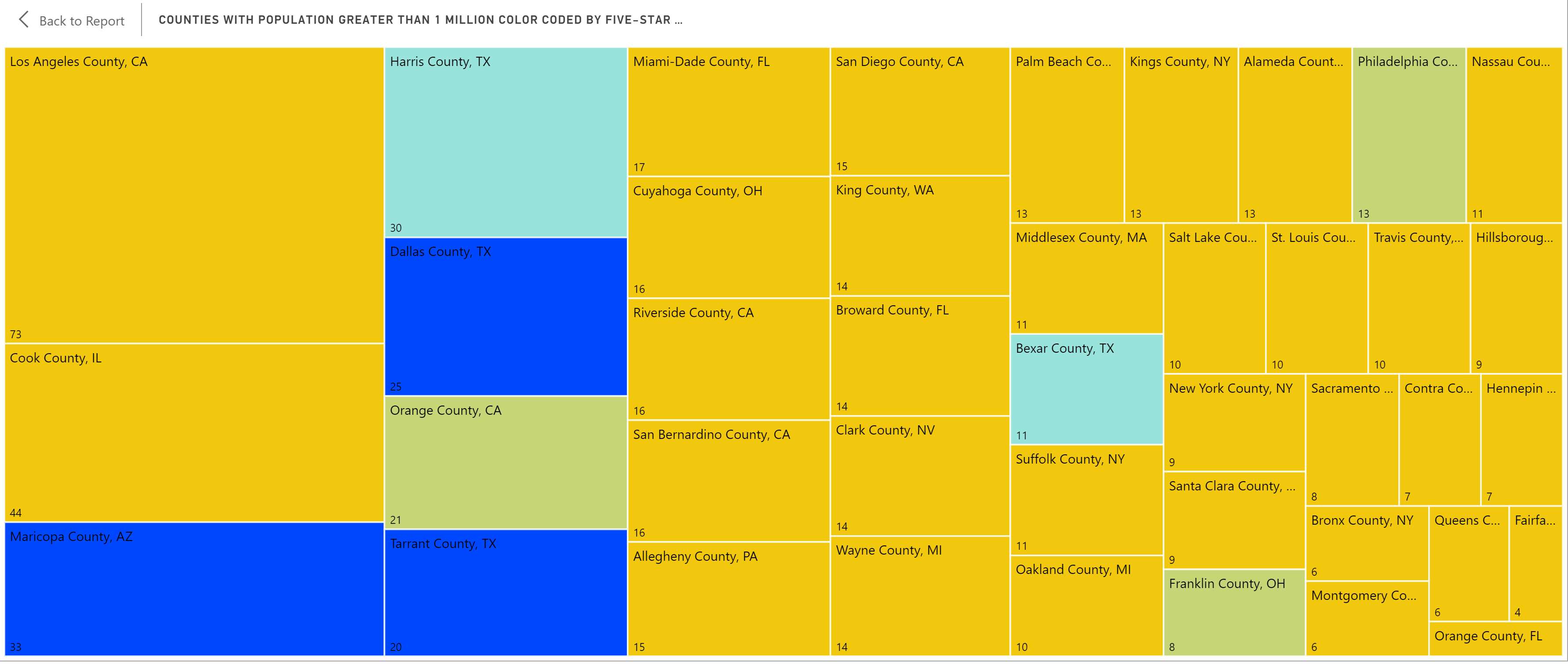
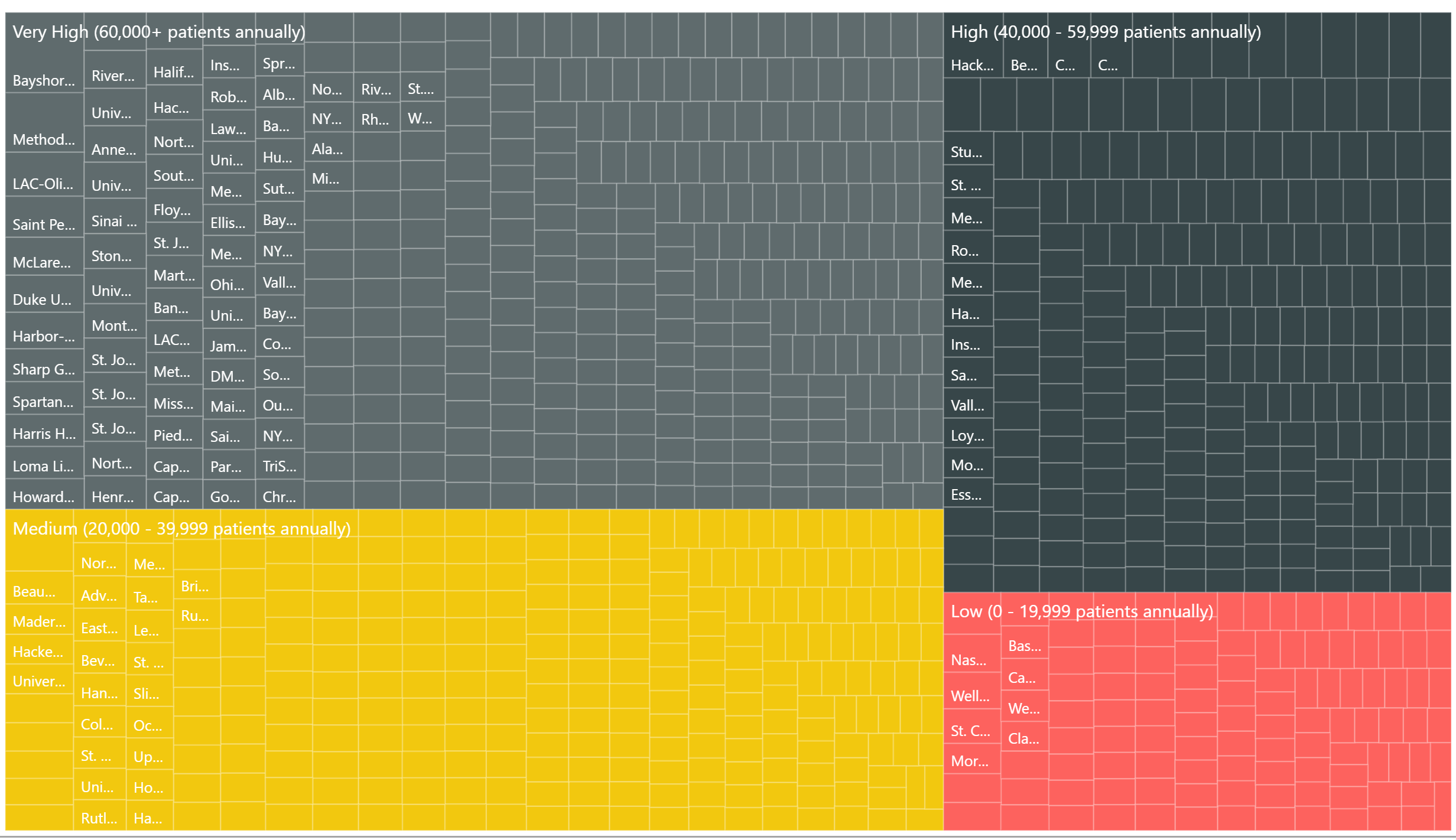
Just like the busiest airports, the busiest emergency rooms tend to have the longest wait times. The treemap below shows a visual image of the hospitals with above average wait times. As you can see, about 70% have high or very high volume as defined by CMS. So as you think about time in the emergency room, ultimately you probably want to think in terms of care first (even as you grow impatient).



Share This Story

Similar Posts

  • Healthcare Rankings and the Healthiest Cities

    We in the U.S. love our rankings. I think it is embedded in our DNA. As a student of data, I love to see the various rankings and how people get worked up over them. Healthgrades recently released its latest analysis of top quality hospitals and its National Health Index, which…

  • Private Room Average Hospital Stays up 10%

    While average length of stay has experienced a long-term decline, one component of average stay seems to be increasing – private rooms. The average stay in a private room increased nearly 10% based on an analysis of the 2016 Medicare Provider Analysis and Review (MedPAR) data set.    Even more…

  • The Race for Nurses

    There is a race that is brewing between millenials who are becoming registered nurses and the hiring that has started at U.S. hospitals. A Health Affairs study concluded that Millennials are becoming registered nurses at nearly twice the rate of baby boomers, but that still won’t necessarily prevent a nursing shortage…

  • Nursing Home Coverage of the Elderly

    While long-term care services more than the elderly, approximately 63% of residents are 65 or older. According to the Administration on Aging, population 65 years or older will increase from 14.1% of the population to 21.7% of the population by 2040. As the population ages over the course of the…

  • Women's Basketball Revenues Gaining Ground

    Women’s basketball revenues are closing in on the $1 billion mark according to the latest data from the Equity in Athletics Disclosure Act. Women’s basketball revenues for the 2014-15 year were $806 million dollars. This represents 43% of the men’s basketball revenues from the same year of $1.87 billion. However,…

  • Is There an Oasis in the New Food Data?

    The recently released updated Food Environment Atlas data by the USDA give us a real glimpse into the progress that we as a nation are making on combating food deserts. The USDA defines food deserts as lack of access to a healthy food retail outlet (a supermarket or large grocery store)…