FAFSA Application Volume Down 11%

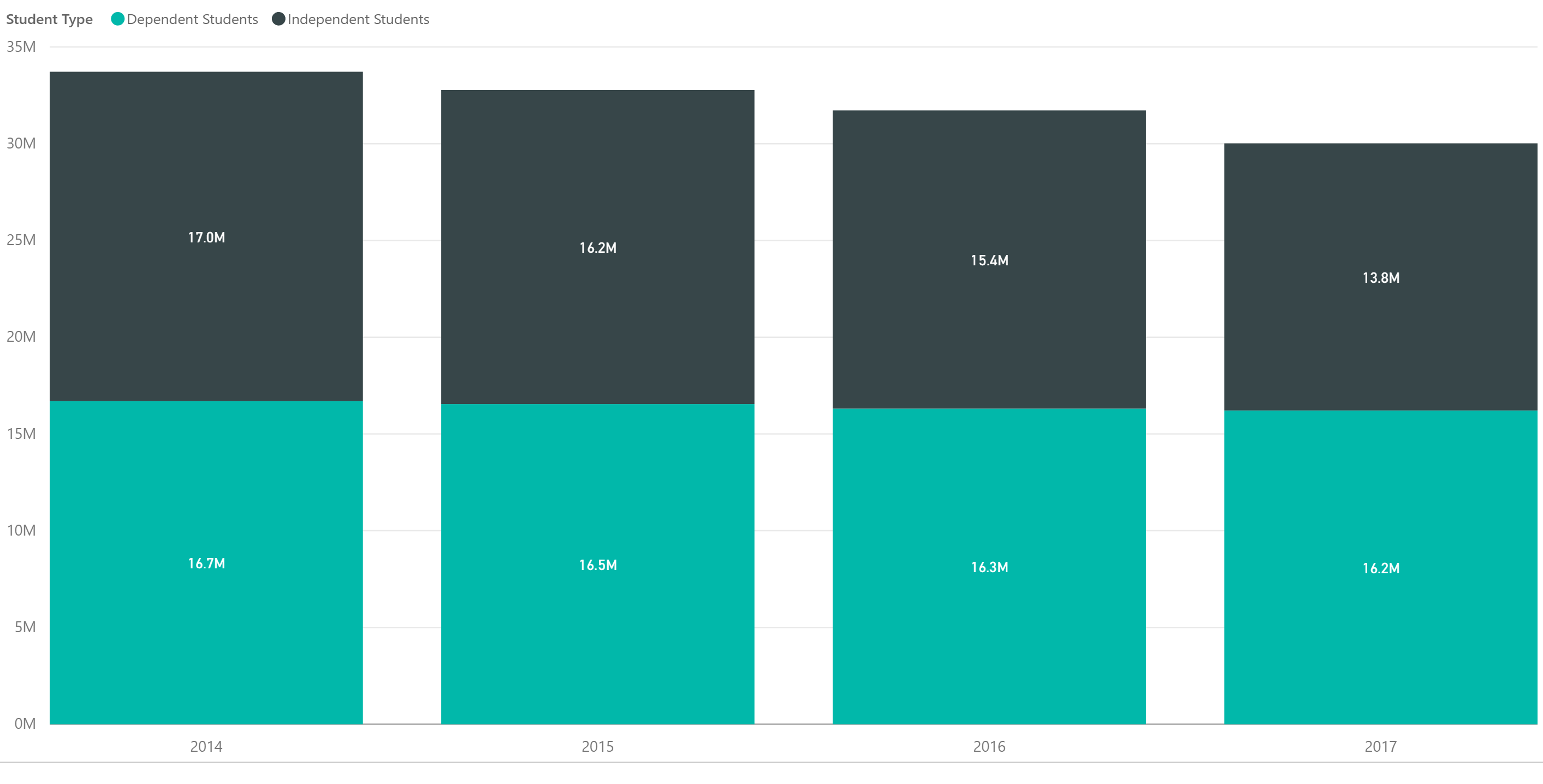
The FAFSA Application Volume declined nearly 11% for the application cycles from June 30, 2014 through June 30, 2017 based on data from Federal Student Aid and analyzed using the Financial Aid Interactive. FAFSA application cycles are based on an 18-month period for any one particular school year.  Note the June 30, 2017 cycle has one quarter to go but the last quarter is historically less than 1% of the total volume. 


The volume change was almost exclusively concentrated with independent students which declined nearly 19% during the same period. Dependent students remain relatively flat during the same period as noted in the following graph. 


Share This Story

Similar Posts

  • Regional Disparities in Health Insurance

    We all know that health insurance is a moving target. According to the most recent ACS survey data, the national uninsurance rate declined from 13.0% to 11.7% in 2016. Public insurance coverages increased slightly more than private coverages (increases of .9% and .6%) respectively. This change was short-lived as Gallup…

  • Outpatient Medicare Hospital Costs up 13%

    The 2016 outpatient procedure data shows overall hospital volume up 11% from 2015. Using data from the Outpatient Procedure Analysis Interactive, we also found that the volume times the average full cost (weighted average cost) on a procedure basis has increased 13.3%. We ran the numbers several ways – first…

  • Top Ten States with Growing Tuition Costs

    Nell Gluckman of The Chronicle of Higher Education wrote an interesting piece about the challenges of public cutbacks in the state of Louisiana. The premise of the article is that there are trickle-down implications of state cutbacks in tuition, faculty morale, and curriculum. Louisiana has passed along substantial tuition increases to its…

  • When is a Job Essential?

    Critical Infrastructure Accounts for 60% of Jobs as the Rest Open Up The stay-at-home orders under the COVID-19 pandemic separated “essential” from “non-essential”. Businesses deemed essential stayed open. Those that were not essential shut down. Sometimes those lines were very blurred with individual states and even communities making those choices…

  • On Faculty Compensation and Gender Disparity

    It will take many years for the faculty gender pay gap to close at the current rate of change. From 2014 to 2015, women received around half a percent higher pay increase from men over the various institutional sectors. There is still a 16% and 14% gender pay gap for full professors…