Hospital Staff Vacancies Support Healthcare Hiring Bonanza

Despite an overall tepid rebound of jobs, the outlook for jobs in the healthcare field is expected to continue to be strong. According to the US Bureau of Labor Statistics, healthcare will generate 3.2 million new wage and salary jobs between 2008 and 2018, more than any other industry. Over the 2008-18 period, total employment of home health aides is projected to increase by 50 percent, medical assistants by 34 percent, physical therapist assistants by 33 percent, and physician assistants by 39 percent. Within the inpatient world, Registered Nursing (RN) is listed among the top occupations in terms of job growth through 2022. The RN workforce is expected to grow from 2.71 million in 2012 to 3.24 million in 2022, an increase of 526,800 or 19%. The Bureau also projects the need for 525,000 replacements nurses in the workforce bringing the total number of job openings for nurses due to growth and replacements to 1.05 million by 2022.


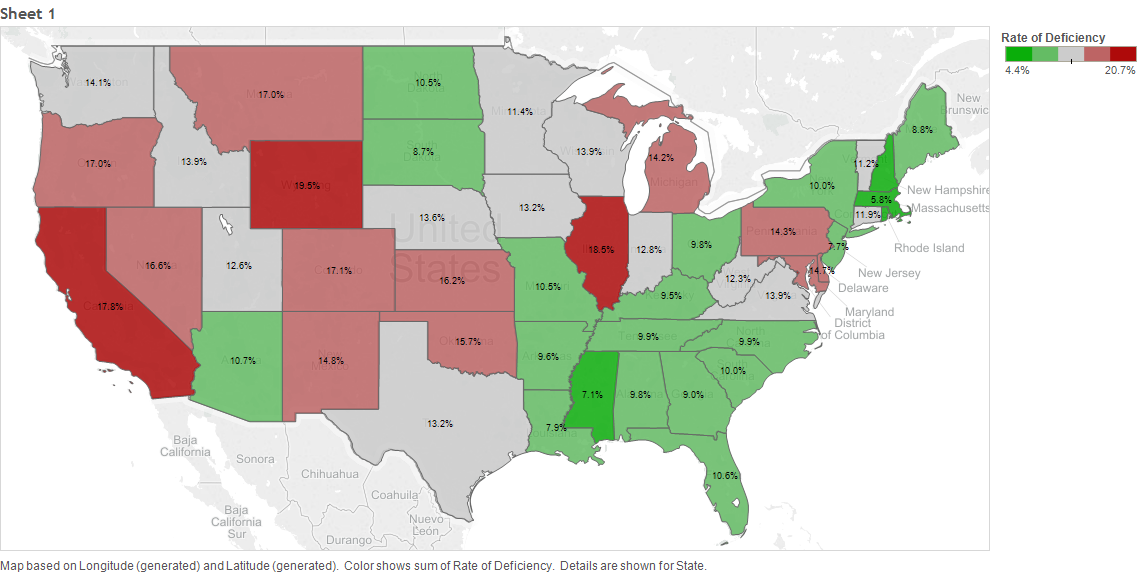
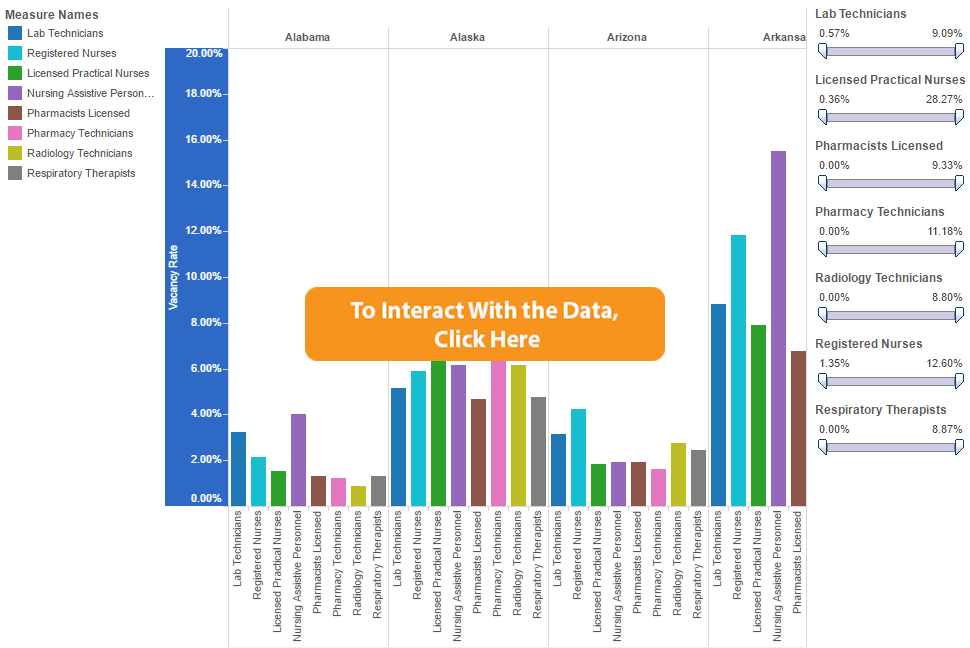
Staffing vacancy data from America’s hospitals seem to support the projections. The American Hospital Association® Annual Survey captures staffing vacancies by type of position as well as current FTE staff. We related the vacancies to the current staffing levels to arrive at a vacancy rate. We extracted the data by state using Public Insight Omniview and calculated the vacancy rate by position for each state. Vacancy rates range widely by state by position. For example, hospitals in the state of Connecticut show a summary vacancy rate for Licensed Practical Nurses of over 28%. The same state shows a vacancy rate of just over 6% for registered nurses. You can analyze the vacancy rate by state using the Tableau Public visualization we’ve created. You can zoom in on a particular state vacancy rate by using the sliders. To interact with the Tableau visualization and the data, click HERE.


Share This Story

Similar Posts

  • Maternal Care and Rural Counties

    An interesting study published in the September issue of Health Affairs found that 9 percent of rural counties experienced the loss of all hospital obstetric services in the period 2004–14. In addition, another 45 percent of rural US counties had no hospital obstetric services at all during the study period. We…

  • The Debt Service Cost of PLUS Loans

    Last week, we observed that the PLUS loan program continues to escalate both in terms of dollars borrowed and in terms of recipients. Using the newly published Financial Aid Interactive, we projected the number of dollars borrowed by PLUS loan borrowers will increase 1.25 billion for the year ending June,…

  • Lower Student Default Rates – Calm Before the Storm?

    Loan repayment rate data may trigger resurgence in default rates The most recent Federal Student Aid student default rate data indicates that the composite student default rates declined from 10.8% in 2015 to 10.1% in 2016, a decline of 6.5% and continuing a seven-year post-recession trend. In 2010, the default…

  • Degrees, Jobs, and Crosswalks

    My daughter has a Bachelor’s Degree in Fine Arts with a concentration in Cartooning and Illustration. Today, she is a quality assurance manager for a software company. I am very glad that her career has morphed into a burgeoning field because it was very clear to me that it would…

  • Powerball and Endowment Wealth per Student

    Large dollars tend to attract many of us. That is why the Powerball attracted so many people at the tidy sum of 1.3 billion. Yet the larger the number, the more people participate. Someone had the brilliant idea of distributing Powerball winnings to everyone in the country thinking it would…

  • CMS Releases 2016 Opioid Prescription Data

    This week, CMS released 2016 Opioid Part D Prescribing Rates data which follows on the heels of the original release several months ago. This data release includes Opioid prescriber, claims, and extended release claims at the national, state, county, and zip code level. We have updated our Opioid Prescribing Rates…