
In this Data Dan video, Dan uses data from the Equity in Athletics data set from Title 9 Participating schools to look at fringe sports at colleges across the country.

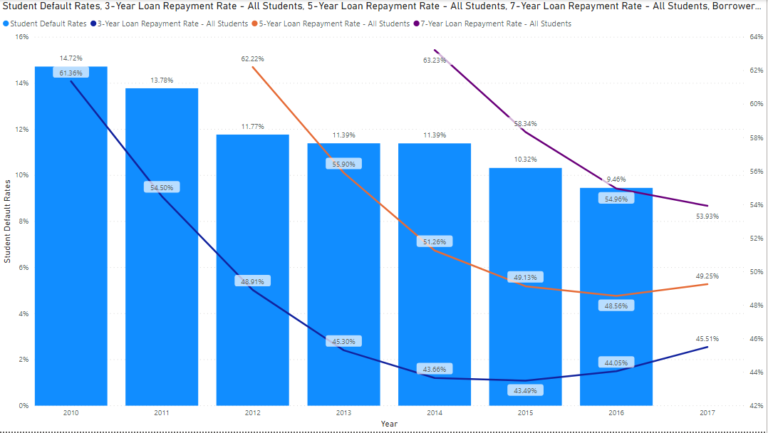
Loan repayment rate data may trigger resurgence in default rates The most recent Federal Student Aid student default rate data indicates that the composite student default rates declined from 10.8% in 2015 to 10.1% in 2016, a decline of 6.5% and continuing a seven-year post-recession trend. In 2010, the default…
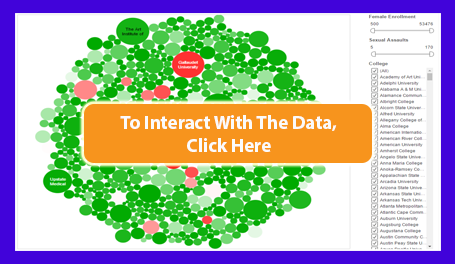
The incidence of sexual assaults on college campuses continues to be a hot topic in light of the Stanford student sentencing. This has again raised the issue of how effective campuses are at handling sexual assaults. As I have blogged previously, institutions receiving Title IV dollars must report specific acts…
The U.S. Department of Education announced yesterday the beginning of the process to rollback and rework Obama-era rules under the gainful employment regulations. These rules, which took years to enact, were designed to hold career-preparation programs accountable for the outcomes of their graduates. The announcement establishes rule making committees to…
The IPEDS Enrollment by Major Fields of Study is collected every other year and 2016 is a new reported year. IPEDS collects nine major fields of study and the enrollment is disaggregated by attendance status (full-time, part-time), level (undergraduate, graduate), race, and gender. There are numerous ways to breakdown…

After three straight years of 3-5% increases, room and board annual growth has finally slowed to a more pedestrian 2-3%. In recent years, universities have invested heavily in on-campus facilities and presumably passed these costs to the students at a rate greater than inflation. One administrator once told me that on-campus facilities…
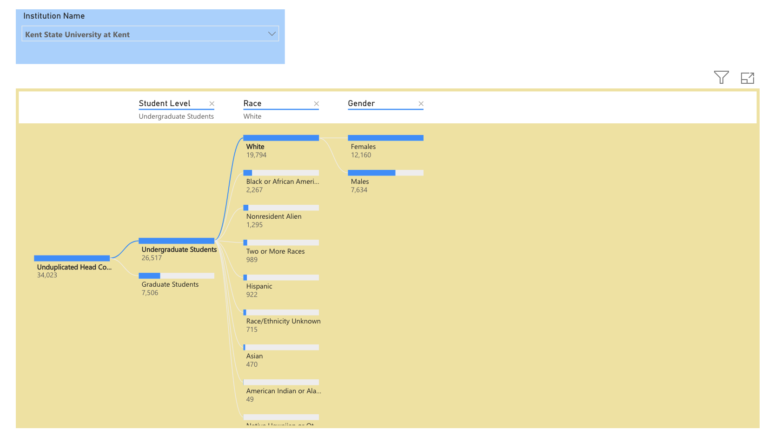
New Microsoft® Power BI Visual Dynamically Analyzes Categorical Data Like fashion goes in and out of style, so do visual ways of exploring data. Several decades ago I worked with a visual called the Decomposition Tree from an upstart company Proclarity from Boise, Idaho to analyze multi-dimensional data. That company…