Infection Procedures Top Inpatient Volume Growth

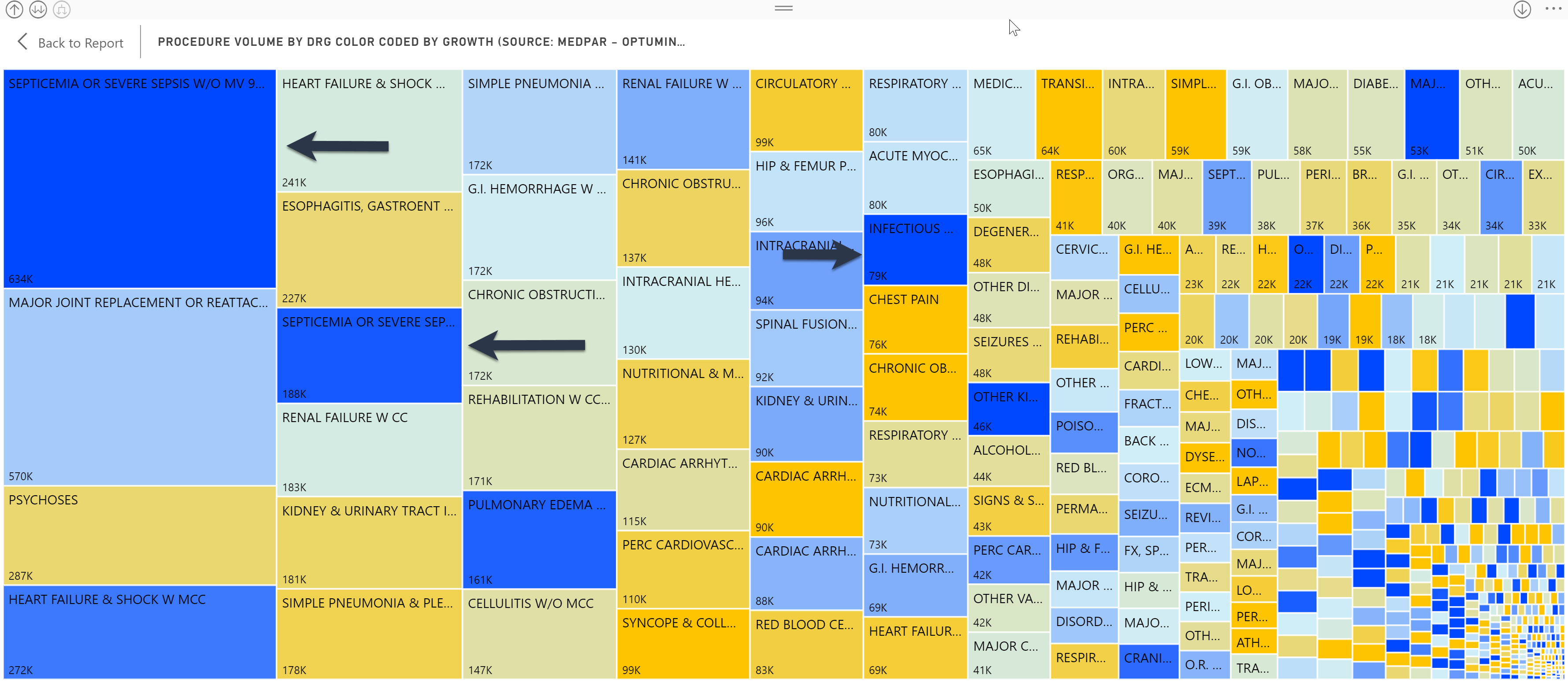
While Medicare inpatient procedure volume has remained flat since 2013, infections are a significant area of high volume change. The treemap below from the Inpatient Procedure Analysis Interactive shows the inpatient volume growth by procedure with color coding by volume change from 2013-2015 using the Medicare Provider and Analysis Review (MedPAR) file. The size of the data square indicates the relative number of procedures while the dark blue color indicates the highest growth.


Septicemia or Severe Sepsis with major complications provided both the highest number of procedures at 633,593 or about 6% of all inpatient procedures AND the highest volume growth at 33%. Further, other infections and infectious diseases have exhibited high inpatient volume growth.


Reasons for the rise in Septicemia or Severe Sepsis procedures vary. According to the Washington Post, this increase may be related to several causes, including an increase in the number of invasive surgeries, the rise of antibiotic resistant bacteria, and those who have compromised immune systems such as people with AIDS or those receiving chemotherapy.

Share This Story

Similar Posts

  • What the Ascension – Presence Merger Reveals

    This week, Ascension Health acquired Presence Health, combining the largest Catholic-sponsored healthcare system in Illinois with the nation’s largest Catholic health system, the companies announced Tuesday. The acquisition is subject to regulatory approvals. The deal underscores a continued trend towards market consolidation.    It seems Ascension, at 141 hospitals, acquiring an…

  • Inpatient vs. Outpatient – What the Numbers Show

    Analysts in health care don’t agree in unanimity very often, but most seem to agree that there will continue to be a quantum shift in healthcare from inpatient to outpatient. In this two part series, we will attempt to quantify and support this important trend. We utilized the Beds and…

  • Nursing Home Coverage of the Elderly

    While long-term care services more than the elderly, approximately 63% of residents are 65 or older. According to the Administration on Aging, population 65 years or older will increase from 14.1% of the population to 21.7% of the population by 2040. As the population ages over the course of the…

  • Student Financial Aid up 6.2%

    Postsecondary institutions gave over $17 billion in financial aid in 2015. This represented a 3% increase from 2014. However, the number of student receiving the financial aid declined 3% so the average financial aid per student when looked at over the entire postsecondary landscape actually increased 6%. We used data…