Death Rate Continues to Inch Up

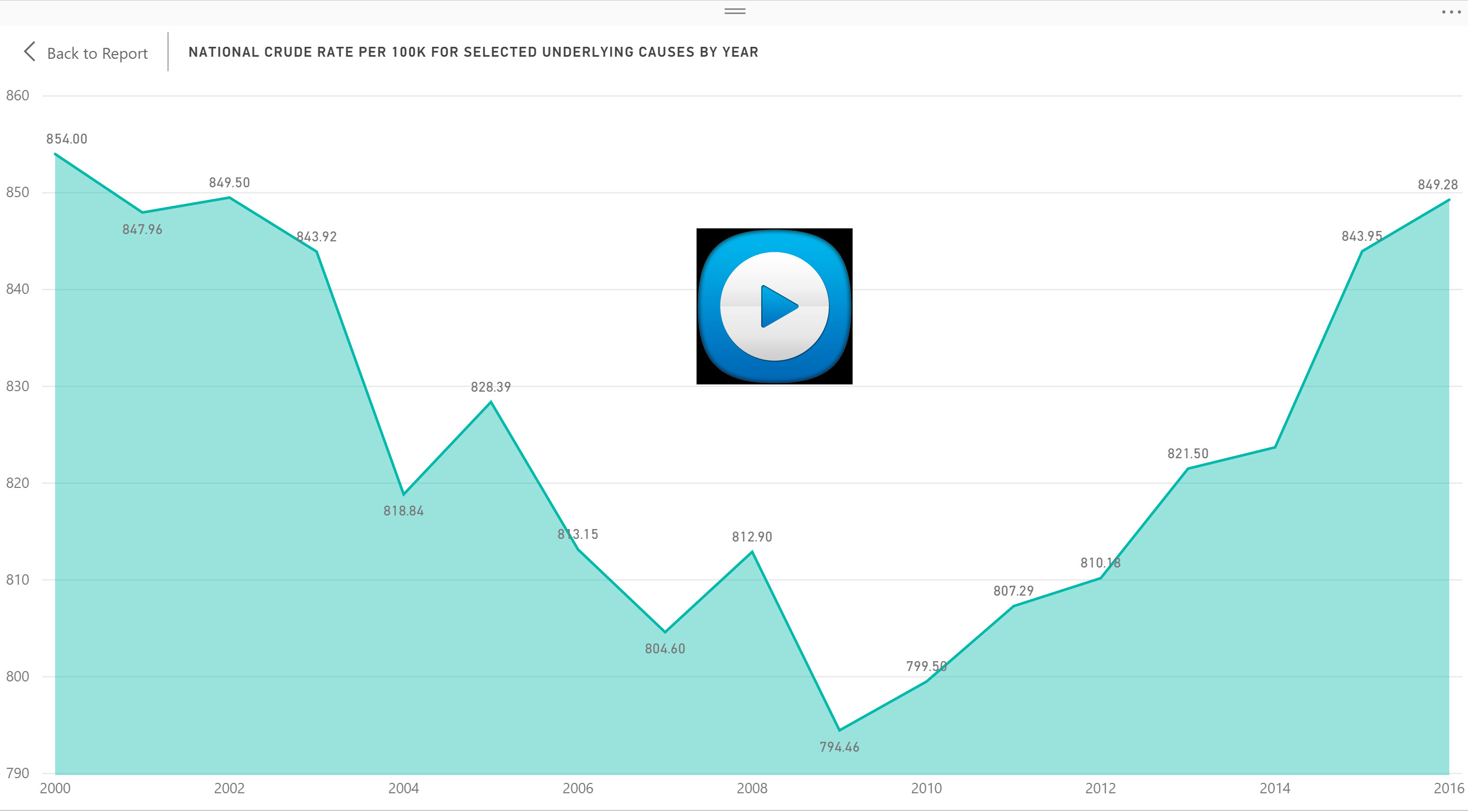
The mortality (or death) rate increased nominally from 2016 to 2017 going from 844 to 849 deaths per 100,000. This probably is not earthshaking news but based on the overall crude rate, it has actually been increasing since 2009 as noted by the following graph.


Advances in medical care have brought down most cause (ICD10) classifications. However, there are several groups of codes that are pushing the mortality rate up. These include mental and behavioral disorders (“F” Codes), diseases of the nervous system (“G” codes), and external causes (“V to “Y codes). External causes, which include drug overdoses, have gone up nearly 8% in the past year and 24% since 2009, when the overall death rate resumed its climb. We examine these causes in my video blog


Share This Story

Similar Posts

  • When is a Job Essential?

    Critical Infrastructure Accounts for 60% of Jobs as the Rest Open Up The stay-at-home orders under the COVID-19 pandemic separated “essential” from “non-essential”. Businesses deemed essential stayed open. Those that were not essential shut down. Sometimes those lines were very blurred with individual states and even communities making those choices…

  • How Healthy Are U.S. Hospitals?

    If we said that 20% of any industry was at financial risk, we would all be up in arms. However, a recent Morgan Stanley report citing that statistic was met with some degree of yawning. The report cites that 450 hospitals are at risk of closure and another 600 are…

  • Decoding Outcome Measures Data

    Breaking Down the Second Year Student Success Measure The IPEDS Outcome Measures data was designed as a supplement to graduation rate data which has always been questioned as an effective measure for measuring student outcomes. Outcome Measures is now in year two of its collection and provides a lot of…

  • Is the Federal Work Study Program Working?

    Over 4,000 institutions participate in the Federal Work Study Program. This program provides funds for part-time employment to help needy students finance the costs of postsecondary education. For the fiscal year ending June, 2016, $1.16 billion was paid to students under this program. This was roughly the same as the…

  • Hot Growth Industries

    The building boom is officially back after a long hiatus. The number of construction employees increased 5% in 2016 according to the most recent County Business Patterns released by the U.S. Census.  The sector however with the most number of new establishments is the Information sector (NAICS 51) which increased 5%….