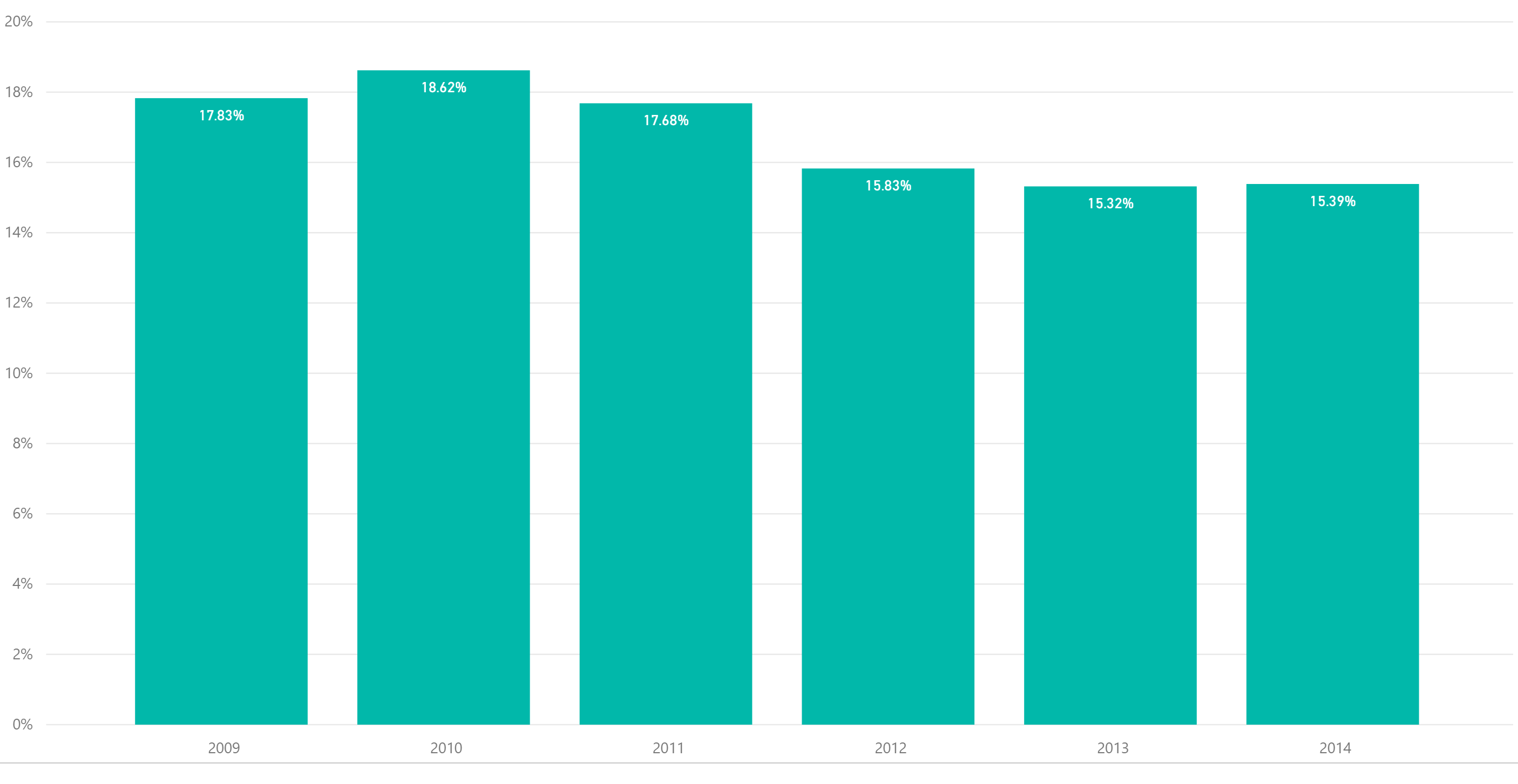
Student Default Rates for 2014 Flatten at 15.4%

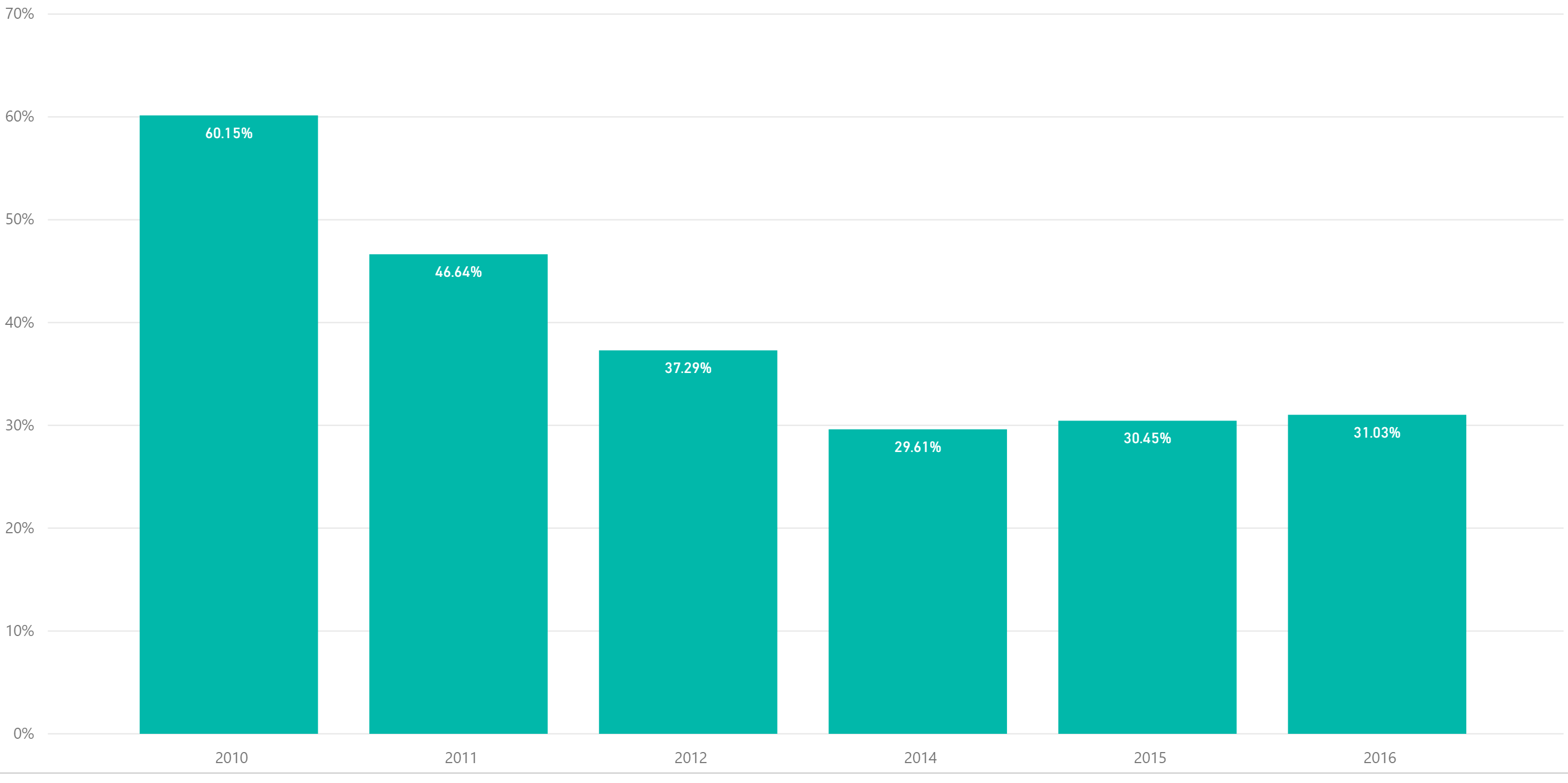
Last week we looked at student repayment rates and noted that longer-term repayment rates continue to decline for five and seven year repayment periods. Repayment rates are in essence a measure of optimism as it is the percentage of students who have made progress in paying down their student loans. This week, we are looking at measures of pessimism which are student default rates. The most recently published student default rates, when weighted for cohort size by institution, shows that student default rates were ostensibly flat from 2013 to 2014. Default rates are defined as a failure to repay a loan according to the terms agreed to in the promissory note. For most federal student loans, a default is if a payment has not been made in more than 270 days. The 2014 numbers represent about 630,000 borrowers in default.


Student Default Rates


However when looking more closely at the default rates by sector, we noticed that the private non-profit under two year institutions show an alarming increase in default rates from 22-27%. However, it is less than 1% of the students in default and still an improvement from 2009 when it was over 30%. Most of the sectors appear to be flat in change. As noted previously, student default rates can be a moving target as loans can be refinanced. Default is often a last resort and therefore default rate is a lagging indicator.


Default Rates by Sector


Share This Story

Similar Posts

  • Using AI to Break Down Head Count

    New Microsoft® Power BI Visual Dynamically Analyzes Categorical Data Like fashion goes in and out of style, so do visual ways of exploring data. Several decades ago I worked with a visual called the Decomposition Tree from an upstart company Proclarity from Boise, Idaho to analyze multi-dimensional data. That company…

  • 12 College Programs with 100+% Growth

    Johnny Nash wrote an award winning song in 1972 called “I Can See Clearly Now”. It was one of those one-hit wonders that still is around today. Johnny would be proud to learn that the field of Vision Science and Physiological Optics topped our findings for emerging program growth with…

  • Villanova vs. Michigan in Athletic Costs

    Villanova clearly dominated Michigan on the basketball court and has now won the NCAA Men’s basketball tournament two of the last three years. But how has that success translated to other sports and to the athletic costs in general.    The Equity in Athletics data is released annually by the…

  • Distance Education Programs up 8.2%

    Distance Education continues its upward climb according to the most recent distance education data from IPEDS. The number of programs increased 8.2% in 2016, but this increase was less than the whopping 12.6% in 2015. There are now over 29,000 programs offered through distance education. Certificate programs continued their strong…

  • Rural Hospitals are Five-Star According to CMS

    Los Angeles County, CA and Cook County, IL (Chicago) have 117 CMS rated hospitals between them and over 15 million residents. Yet, there is not a single five-star hospital in either county. In this mini-series, we have examined the profile of the current 188 five-star hospitals as it marks its…

  • The States That Send Students Elsewhere

    IPEDS reports residency numbers for first-time undergraduates by state. This data can be challenging to work with from several perspectives. It is not collected every year by every institution and it does not summarize the students coming from out of the state of the institution.     The Enrollment Suite…