12 Colleges with Sustained Enrollment Growth


According to data collected from the Integrated Postsecondary Education Data System (IPEDS), 60.6% of colleges experienced flat or declining enrollment growth while only 39.4% experienced increasing enrollment growth from 2013-2014. This is also very consistent with statistics from 2012-2013.


College enrollment growth may be hard to sustain and have ebbs and flows based on new programs or strategic investments. I wanted to follow a methodology to uncover those colleges with sustained enrollment growth over a five year period. This is like the kinds of methodologies we see for company growth in publications like Fortune Magazine.


My methodology was based on a minimum of 500 students in 2010 and I required that the growth be at least 10% year-over-year (YOY) for every year from 2010 to 2014. Finally, the schools had to have an existing Carnegie Classification. I used Public Insight to define individual YOY growth conditions and then ranked the schools by the overall five year enrollment growth. See my methodology and the calculations in the video.


Surprisingly only 12 schools fit this criteria of sustained enrollment growth. In digging deeper, I also found the top 7 and 8 of the 12 had more than 50% of the student population enrolled exclusively in distance education. Distance education has only been captured for the past three years by the Integrated Postsecondary Education Data System (IPEDS) so I am interested in exploring this topic further. The 12 schools that fit my criteria and their 5 year enrollment growths follow. Schools with a predominant distance education approach are highlighted in red.


Chamberlain College of Nursing – Illinois (1,140.20%)
Southern New Hampshire University (438.64%)
Concordia University – Portland (251.70%)
Miller-Motte College – Wilmington (190.52%)
Brigham Young University – Idaho (145.26%)
Western Governors University (157.02%)

Central Christian College of Kansas (124.90%)
Hondros College (118.39%)
Edward Via College of Osteopathic Medicine (90.25%)
University of Hawaii – West Oahu (80.90%)
University of the Cumberlands (73.82%)
California Baptist University (68.86%)

 

By clicking on this link, you can download a complete list of U.S. colleges with individual enrollment growth metrics for each of the past five years and the overall five year enrollment growth.

Share This Story

Similar Posts

  • Self-Funded Research Remains the Trend in Higher Education

    Research and development expenditures continued their flat growth since 2011 according to the most recent data from the National Science Foundation Higher Education Research and Development Survey (HERD). Research expenditures increased 1.66% for all reporting institutions from 2013 to 2014 and have increased cumulatively only 4.76% since 2011.  The primary…

  • Death Rate Continues to Inch Up

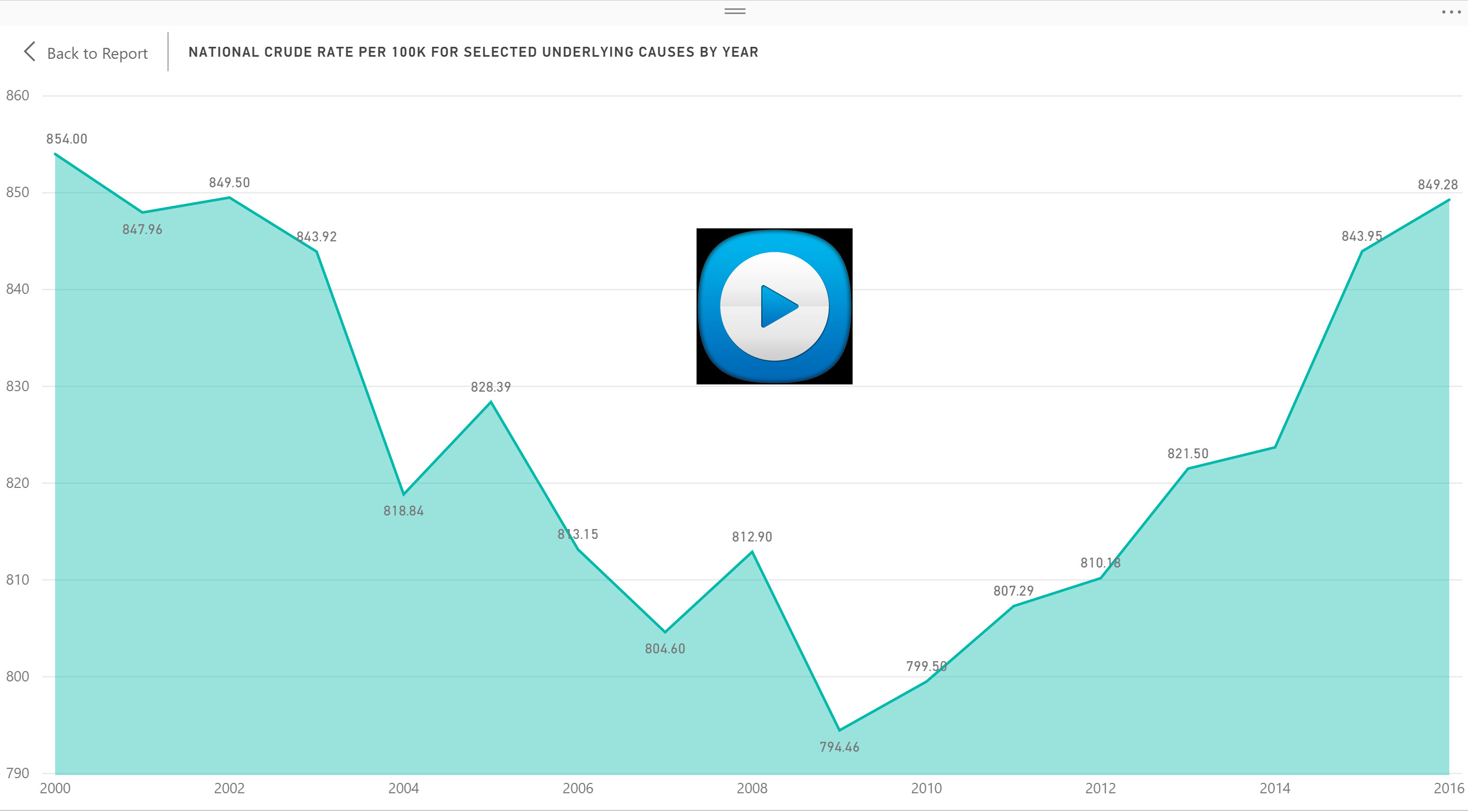
    The mortality (or death) rate increased nominally from 2016 to 2017 going from 844 to 849 deaths per 100,000. This probably is not earthshaking news but based on the overall crude rate, it has actually been increasing since 2009 as noted by the following graph.   Advances in medical care…

  • Infection Rates and the Long-Term View

    My Cleveland Indians have now won 13 games in a row. That along with their overall record and stellar play over the entire season tells me they are a good team. However, at any given point the Indians or any particular player could play really poorly. The similar challenge with…

  • Nursing Home Deficiencies by State

    When nursing home incidents occur, they receive big news. Just this week, a Pinellas Park, Florida nursing care center resident died after appearing to have been left outside in the sun. The nursing home had been cited for various deficiencies and had received a one-star rating. In fact, the nursing…

  • Private Room Average Hospital Stays up 10%

    While average length of stay has experienced a long-term decline, one component of average stay seems to be increasing – private rooms. The average stay in a private room increased nearly 10% based on an analysis of the 2016 Medicare Provider Analysis and Review (MedPAR) data set.    Even more…

  • Inpatient vs. Outpatient – What the Numbers Show

    Analysts in health care don’t agree in unanimity very often, but most seem to agree that there will continue to be a quantum shift in healthcare from inpatient to outpatient. In this two part series, we will attempt to quantify and support this important trend. We utilized the Beds and…