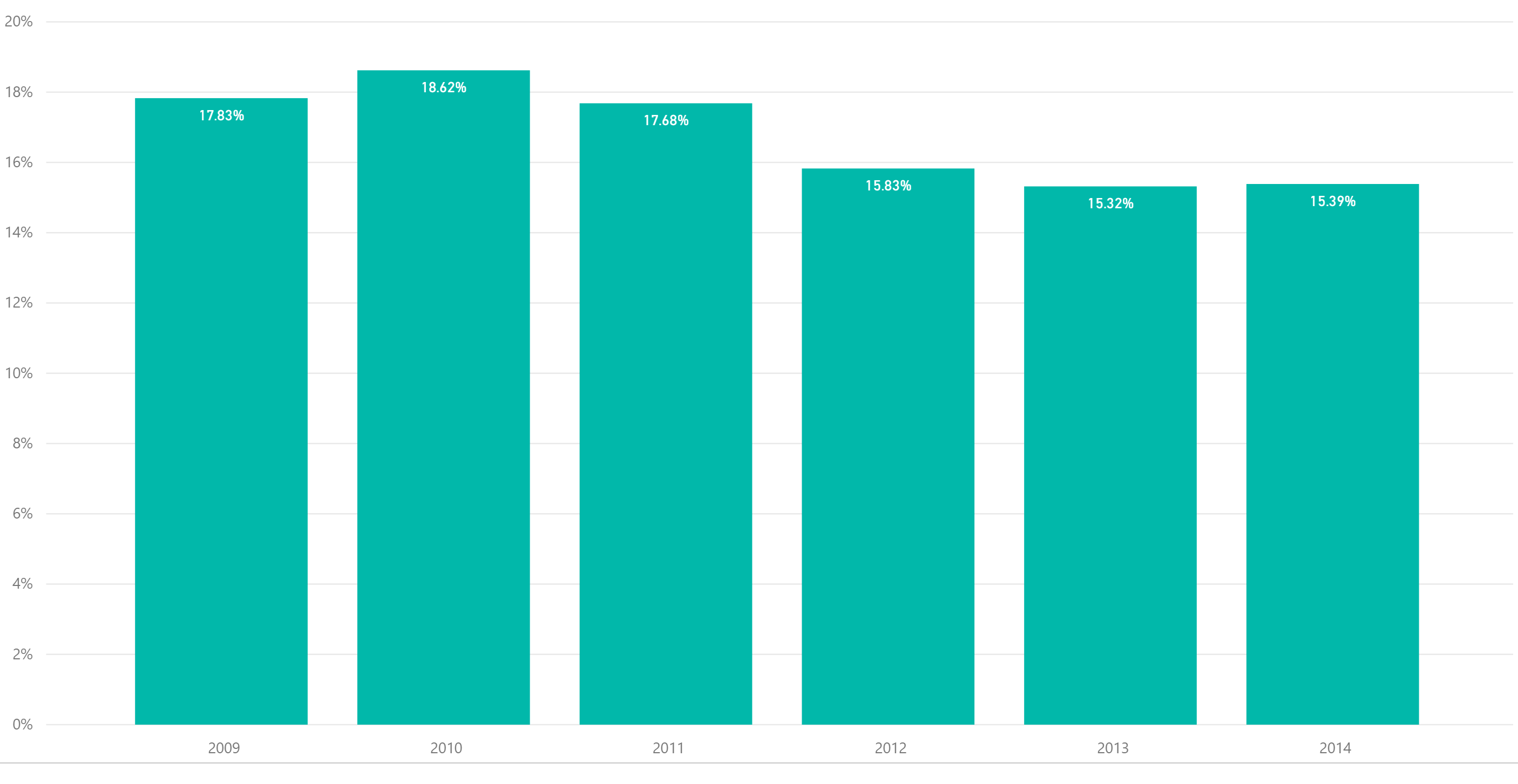
Student Default Rates for 2014 Flatten at 15.4%

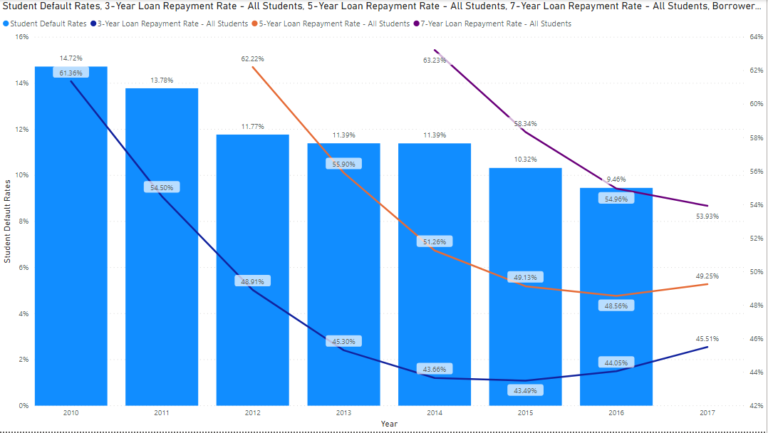
Last week we looked at student repayment rates and noted that longer-term repayment rates continue to decline for five and seven year repayment periods. Repayment rates are in essence a measure of optimism as it is the percentage of students who have made progress in paying down their student loans. This week, we are looking at measures of pessimism which are student default rates. The most recently published student default rates, when weighted for cohort size by institution, shows that student default rates were ostensibly flat from 2013 to 2014. Default rates are defined as a failure to repay a loan according to the terms agreed to in the promissory note. For most federal student loans, a default is if a payment has not been made in more than 270 days. The 2014 numbers represent about 630,000 borrowers in default.


Student Default Rates


However when looking more closely at the default rates by sector, we noticed that the private non-profit under two year institutions show an alarming increase in default rates from 22-27%. However, it is less than 1% of the students in default and still an improvement from 2009 when it was over 30%. Most of the sectors appear to be flat in change. As noted previously, student default rates can be a moving target as loans can be refinanced. Default is often a last resort and therefore default rate is a lagging indicator.


Default Rates by Sector


Share This Story

Similar Posts

  • When is a Job Essential?

    Critical Infrastructure Accounts for 60% of Jobs as the Rest Open Up The stay-at-home orders under the COVID-19 pandemic separated “essential” from “non-essential”. Businesses deemed essential stayed open. Those that were not essential shut down. Sometimes those lines were very blurred with individual states and even communities making those choices…

  • Private Room Average Hospital Stays up 10%

    While average length of stay has experienced a long-term decline, one component of average stay seems to be increasing – private rooms. The average stay in a private room increased nearly 10% based on an analysis of the 2016 Medicare Provider Analysis and Review (MedPAR) data set.    Even more…

  • More Students Paying Out-of-State Tuition Rates

    Over 230,000 students pay out-of-state tuition rates compared to approximately 1.5 million students who pay in-state or in-district rates according to the most recent cohort group from IPEDS. This represents 13.09% of the students and continues an upward progression of out-of-state paying students.    The number of students paying out-of-state…

  • Self-Funded Research Remains the Trend in Higher Education

    Research and development expenditures continued their flat growth since 2011 according to the most recent data from the National Science Foundation Higher Education Research and Development Survey (HERD). Research expenditures increased 1.66% for all reporting institutions from 2013 to 2014 and have increased cumulatively only 4.76% since 2011.  The primary…

  • CDC Publishes 2016 Natality (Births) Data

    The CDC recently released updated Natality (Births) data for 2016. State laws require birth certificates to be completed for all births, and Federal law mandates national collection and publication of births and other vital statistics data. The National Vital Statistics System provides access to statistical information from birth certificates and CDC makes…

  • What the Ascension – Presence Merger Reveals

    This week, Ascension Health acquired Presence Health, combining the largest Catholic-sponsored healthcare system in Illinois with the nation’s largest Catholic health system, the companies announced Tuesday. The acquisition is subject to regulatory approvals. The deal underscores a continued trend towards market consolidation.    It seems Ascension, at 141 hospitals, acquiring an…