Where the Vets Live

As we approach this Memorial Day Weekend, we pause to remember the sacrifice made on our behalf by our veterans. Nationwide veterans comprise 8% of the population. But there are clusters of populations where veterans comprise much higher percentages of the population. This article from Trulia published in Forbes back in 2014 suggests that veterans tend to be in smaller cities near military bases. 


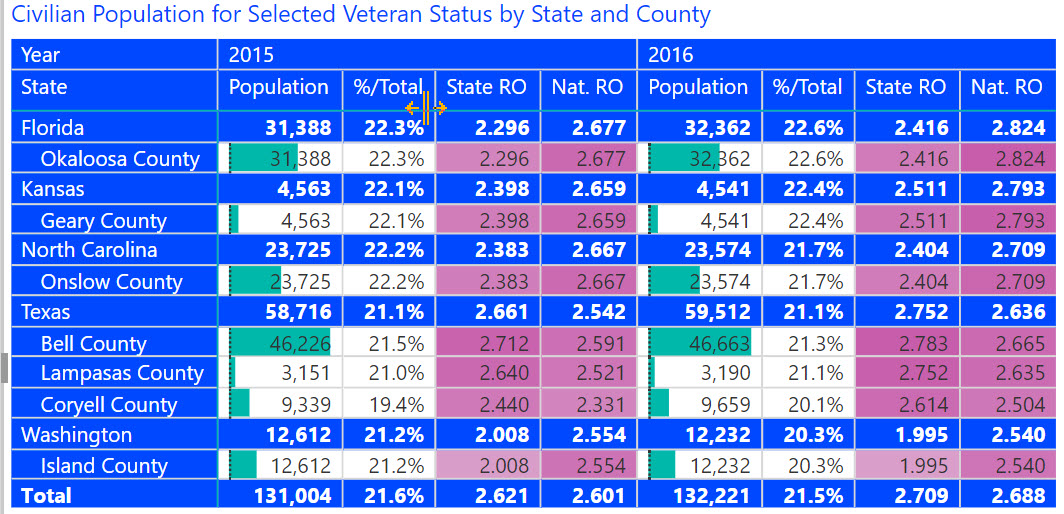
We found seven counties where veterans comprise more than 20% of the general population. Several like in Texas and west Florida are concentrated around military bases. However, having a military base does not necessarily ensure a high veteran population. There are many military bases for example in California, but have a low percentage of veteran population. The article suggests a more rural population for veteran concentrations with high home ownership, older population, and low diversity. The average county population of the seven counties is 132,000, but the average age of 34 is substantially less than the national average at 41. As the article suggests, U.S. Citizenship of veteran concentrations is much higher than the national average at 54% vs. 47%.



Share This Story

Similar Posts

  • Fringe Sport Participation

      In this Data Dan video, Dan uses data from the Equity in Athletics data set from Title 9 Participating schools to look at fringe sports at colleges across the country.  

  • Lower Student Default Rates – Calm Before the Storm?

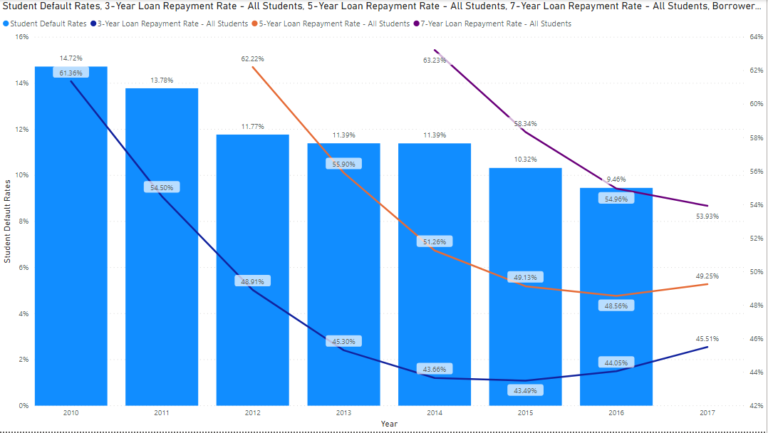
    Loan repayment rate data may trigger resurgence in default rates The most recent Federal Student Aid student default rate data indicates that the composite student default rates declined from 10.8% in 2015 to 10.1% in 2016, a decline of 6.5% and continuing a seven-year post-recession trend. In 2010, the default…

  • Is the Federal Work Study Program Working?

    Over 4,000 institutions participate in the Federal Work Study Program. This program provides funds for part-time employment to help needy students finance the costs of postsecondary education. For the fiscal year ending June, 2016, $1.16 billion was paid to students under this program. This was roughly the same as the…

  • Students Increasingly Opting for High Cost Debt

    Many prognosticators are projecting a coming economic crisis caused by student debt. This is typically focused around an inability to pay off the principal of the loan. But it really appears that we are also setting ourselves up for a real problem with the cost of debt.    Overall new…

  • Regional Variations in Opioid Prescribing Rates

    Given the state of the opioid crisis, any meaningful data is valuable. So when CMS released three years of Opioid Part D prescription data in November, we all rejoiced. CMS also released a mapping tool to analyze the data. While mapping tools can be effective, they can also get in…

  • Have Student Debt Repayment Rates Bottomed?

    Student repayment rates continues to decline, although the trend seems to be slowing, according to the most recent College Scorecard data. This data measures repayment rates at 1,3,5, and 7 years. Repayment rates and default rates are very different. Repayment rates are the percentage of students who have made progress…