Inpatient vs. Outpatient – What the Numbers Show

Analysts in health care don’t agree in unanimity very often, but most seem to agree that there will continue to be a quantum shift in healthcare from inpatient to outpatient. In this two part series, we will attempt to quantify and support this important trend. We utilized the Beds and Utilization Interactive, which leverages numerous reporting metrics from the AHA Annual Survey Databaseā„¢ over a five year period. 


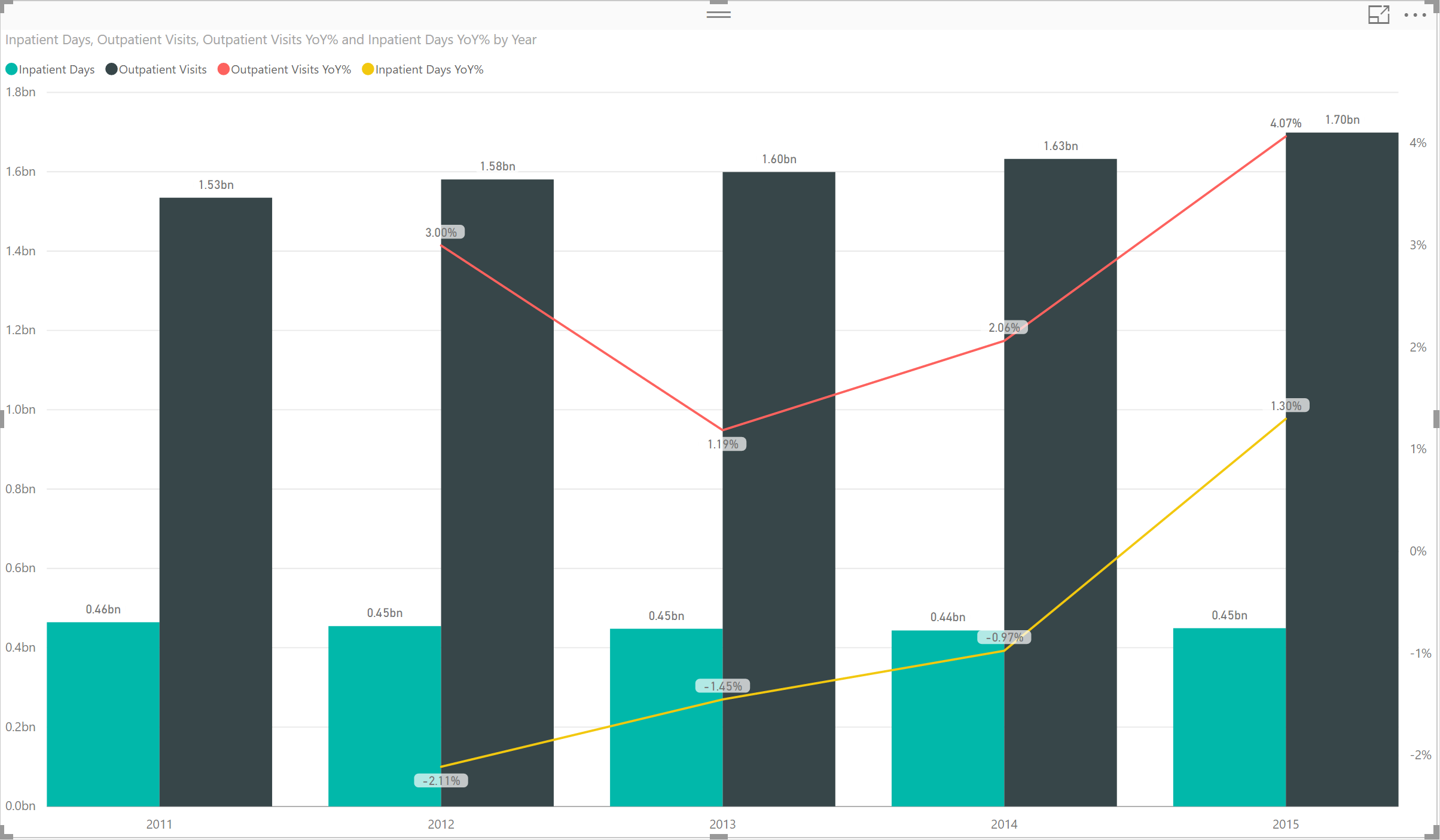
We superimposed inpatient days over outpatient visits over five years. Inpatient days has declined 3.2% while outpatient visits have increased 10.2% over the same time period. The most recent year available, the 2015 survey shows that outpatient visits made its largest annual gain yet of 4.2% while inpatient eaked out a small positive change for the first time in three years. The viz below shows these changes over the five year period.



Share This Story

Similar Posts

  • Diving Deeper into Opioid Prescriber Data

    Last week we introduced the new CMS opioid data set and what it means. This data tries to initiate transparency around this hot topical area even though Part D Medicare claims may not be the best proxy of all opioid prescription activity. There are three elements to this data: Part…

  • March 2020 Job Postings Signals Seismic Labor Shifts

    New Labor Market Analysis Application Released by Public Insight The COVID-19 reality is starting to reflect itself in the labor market. Volatility in the labor market will be the new normal for the foreseeable future. We analyzed and coded over 2 million active job postings as of past Saturday, March…

  • The Debt Service Cost of PLUS Loans

    Last week, we observed that the PLUS loan program continues to escalate both in terms of dollars borrowed and in terms of recipients. Using the newly published Financial Aid Interactive, we projected the number of dollars borrowed by PLUS loan borrowers will increase 1.25 billion for the year ending June,…

  • Tuition Bears Increasing Brunt of Higher Ed. Revenue

    In 2011, Tuition and Fees represented 20.6% of public institutional revenue. In 2015, it has increased to 24.25%. Most of the reshuffling of revenue has come from federal operating grants and contracts as noted by the graphs below. Interestingly, state appropriations have remained relatively constant. Similarly, non-profit institutions have seen tuition…

  • Decoding Outcome Measures Data

    Breaking Down the Second Year Student Success Measure The IPEDS Outcome Measures data was designed as a supplement to graduation rate data which has always been questioned as an effective measure for measuring student outcomes. Outcome Measures is now in year two of its collection and provides a lot of…