CMS Introduces New Hospital Returns Measure

The most recent batch of Hospital Compare data has expanded the whole area of readmissions, returns, and deaths. There are now separate measures for mortality rates, readmissions, and hospital returns. The hospital returns measure is brand new, with the most recent data through June 2016, and applies to heart attack and heart failure patients. We examined this data using the updated Quality Ratings Interactive scheduled to be released next week. 


Hospital returns are defined as the number of days the patient spent back in the hospital (in the emergency department, under observation, or in an inpatient unit) within 30 days after they were first treated and released. The measures compare each hospital’s return days to results from an average hospital with similar patients to determine if this hospital has more, similar, or fewer days than average. The data is compiled using Medicare claims data and eligibility data. 


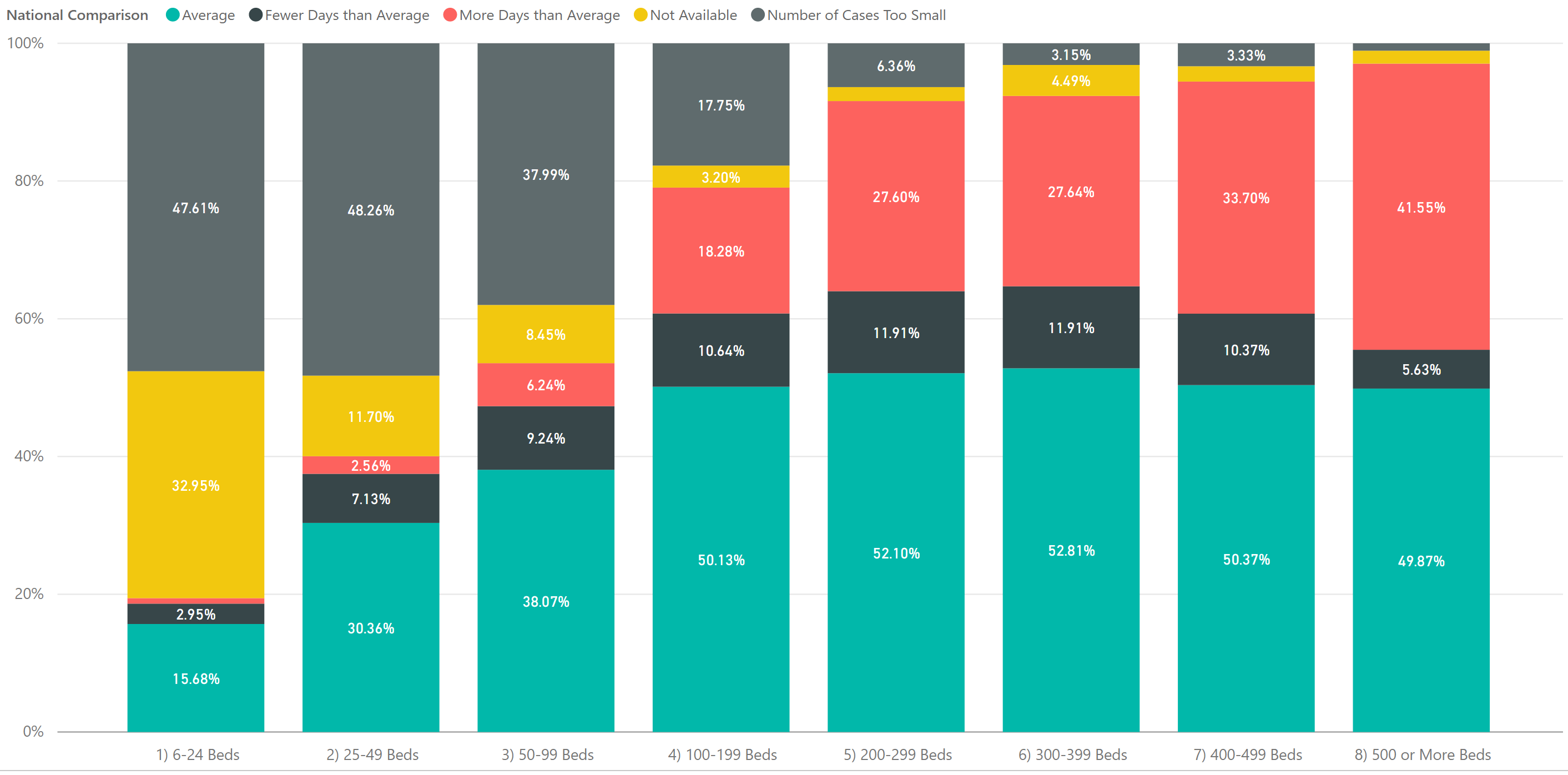
I highlight the word average because what is average? We analyzed hospitals across various categories from size to location to specialty. Starting with bed size, it is clear from the graph below that hospital returns ratings are negatively weighted towards larger hospitals. The red color indicates hospitals with above average returns and the graph is sorted by bed sizes.


This 100% column graph shows the proportionate number of hospitals with return days at the national average, above the national average and below the national average by categories of bed size. Clearly, the graph shows that the larger the hospital, the more likely they are to have above average returns. It is also apparent that the smaller hospitals are increasingly likely to have a volume simply too small to measure. Thus, the pool of available data creates an inefficient comparison.
Share This Story

Similar Posts

  • Violence Against Women Offenses Up 9.5%

    This is the third year that the Campus Safety and Security (CSS) data has released separate violence against women (VAW) offenses. This data captures three types of offenses; domestic violence, dating violence, and stalking and analyzes it for both on campus and off campus locations. Overall, there were 16,183 VAW…

  • Room and Board Cost Increases Slowing

    After three straight years of 3-5% increases, room and board annual growth has finally slowed to a more pedestrian 2-3%. In recent years, universities have invested heavily in on-campus facilities and presumably passed these costs to the students at a rate greater than inflation. One administrator once told me that on-campus facilities…

  • Using AI to Break Down Head Count

    New Microsoft® Power BI Visual Dynamically Analyzes Categorical Data Like fashion goes in and out of style, so do visual ways of exploring data. Several decades ago I worked with a visual called the Decomposition Tree from an upstart company Proclarity from Boise, Idaho to analyze multi-dimensional data. That company…

  • How Long Should You Wait in the Emergency Room?

    We recently had a health scare where a family member spent over 12 hours in the emergency room. While she was not thrilled to spend so much time there, she did ultimately get good medical care. So what is excessive time in the emergency room?   Centers for Medicare &…

  • How Healthy Are U.S. Hospitals?

    If we said that 20% of any industry was at financial risk, we would all be up in arms. However, a recent Morgan Stanley report citing that statistic was met with some degree of yawning. The report cites that 450 hospitals are at risk of closure and another 600 are…

  • What is the Newly Released Carnegie Data?

    The Carnegie Classification™ has been the major institutional framework for describing higher education institutions since 1970. This classification system comes out approximately every five years with the latest rendition released on February 1, 2016. This release represents the initial data provided by the Indiana University Bloomington Center for Postsecondary Research…