Are Outpatient Imaging Quality Measures Effective?

CMS began developing measures evaluating imaging efficiency back in 2007. These performance measures have been distributed as part of Hospital Compare for the past four years. Lower percentages suggest more efficient use of medical imaging. The purpose of reporting these measures is to reduce unnecessary exposure to contrast materials and/or radiation, to ensure adherence to evidence-based medicine and practice guidelines, and to prevent wasteful use of Medicare resources. We looked at this data using the Quality Ratings Interactive which analyzes all of the quality ratings measures from CMS.

  • Overall, imaging performance across the six measures has declined over the past four years or remained flat (MRI for lower back pain has not changed much).

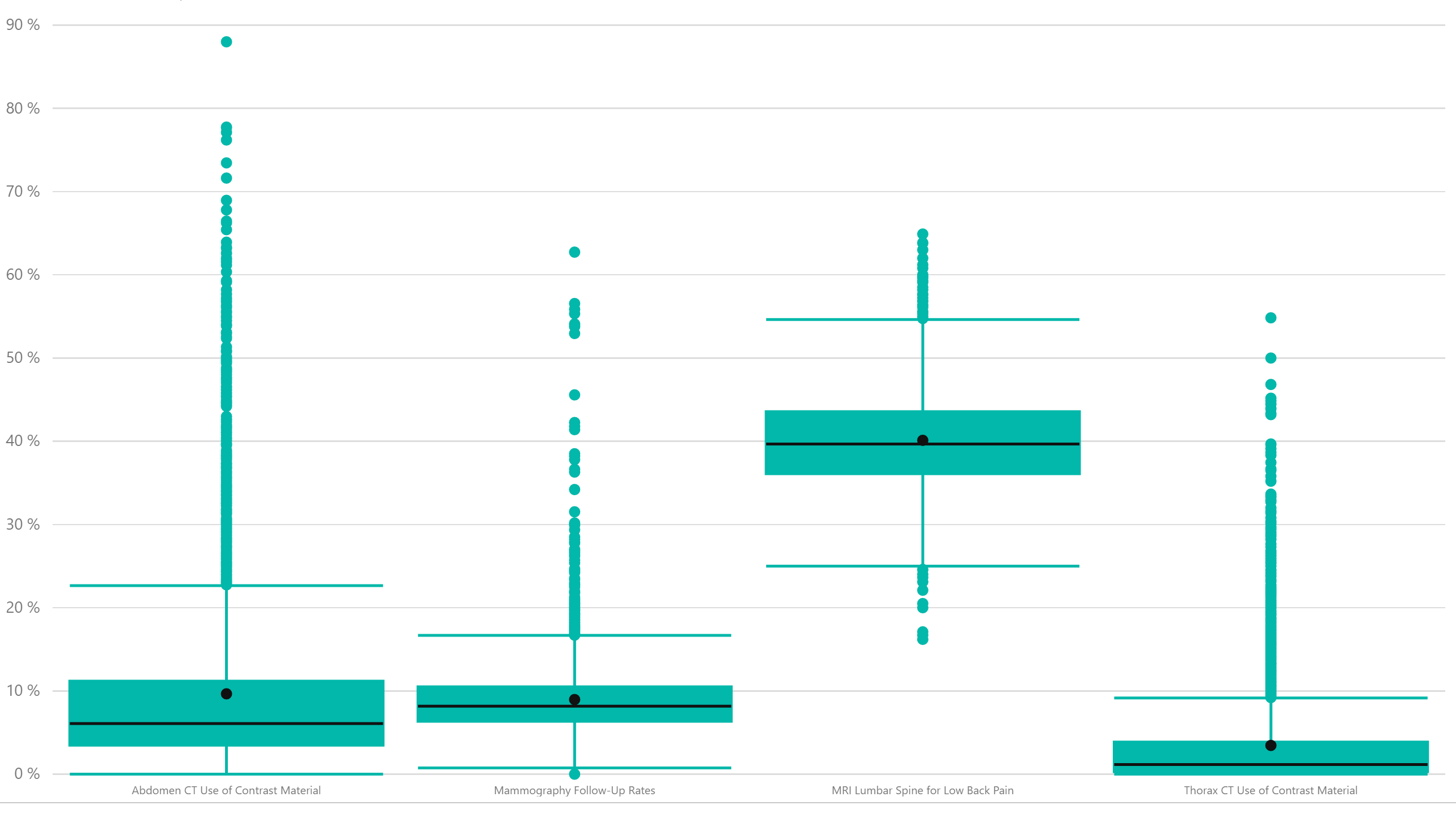
  • However, there is incredible variability among hospitals across all of the imaging measures as shown in the box and whiskers plot below. 

We picked four of the measures to illustrate. The line indicates the median of the performance rate with the inner and outer lines representing the inner two quartiles. Anything outside of that is an outlier. We can see that the number of outliers covers a very wide range of results and even within the inner quartiles, there is a pretty wide range of results (see MRI of the back in particular). Further, the variability has not changed a whole lot over the trailing four years. 


The Lewin Group was contracted by CMS to perform an assessment on these performance rates and they make some interesting observations in their research. You can find these studies on the QualityNet site.
 

Share This Story

Similar Posts

  • Violence Against Women Offenses Up 9.5%

    This is the third year that the Campus Safety and Security (CSS) data has released separate violence against women (VAW) offenses. This data captures three types of offenses; domestic violence, dating violence, and stalking and analyzes it for both on campus and off campus locations. Overall, there were 16,183 VAW…

  • The Gender Debt Disparity

    The Huffington Post recently posted a very interesting article on gender debt disparity. The article notes that women hold nearly two-thirds of all student debt – a whopping $833 billion dollars. The article postulates that women also take longer to pay off the debt because they earn less than men….

  • Student Earnings Experience a Sluggish Recovery

    College students are earning 8% less in 2013 than in 2008 per the most recent data published by the US Department of Education College Scorecard database. Students earned $31,382 in 2013 compared to $34,119 in 2008. The earnings were ostensibly flat from 2012 earnings of $31,528.   The College Scorecard…

  • Gainful Employment – Here Today, Gone Tomorrow

    The U.S. Department of Education announced yesterday the beginning of the process to rollback and rework Obama-era rules under the gainful employment regulations. These rules, which took years to enact, were designed to hold career-preparation programs accountable for the outcomes of their graduates. The announcement establishes rule making committees to…

  • Death Rates Rise Sharply for Millenials

    The new CDC mortality data continues to paint a rather grim picture. Last week we focused on the external causes of the rise in death rates. This week we analyzed the mortality (death) rate among age groups using over 1.8 billion data points over 17 years from the CDC. You…