Much has been written about the increased polarization of America and its collective impact on communities. There were many surprises in the 2016 election and people are bracing for a potentially tumultuous 2018 mid-term election. Ohio, where I live, is one of the swing states. The average county in Ohio changed nearly 8% (based on election over election % change) in the 2016 presidential election to Republican but this is a reversal of the 8% movement towards Democrat in the 2008 election. Are voters fickle or are traditional parties becoming less dominant?
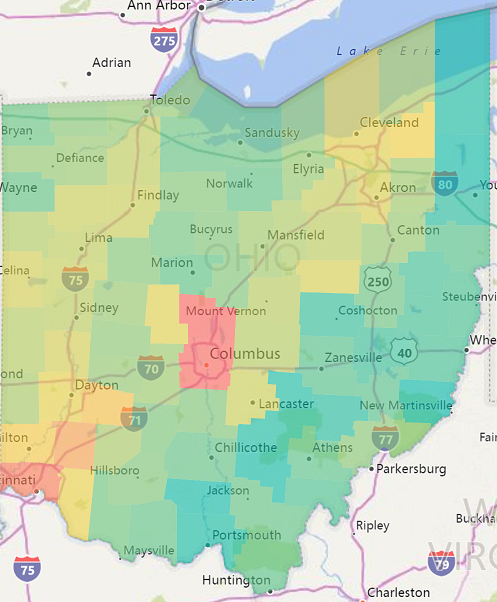
The map below shows the movement from Democrat to Republican (shift is in blue) from 2012 to 2016. No big surprise there, but the map following shows the same movement from Democrat to Republican (shift is in red) from 2004 to 2008; in essence the big reversal. Some counties stayed and moved within their dominant party (e.g. Franklin County), but most simply swung heavily from one party to the other.
2016 Election

2008 Election

So what does that have to do with communities? Voter data is increasingly in the conversation when it comes to community health, planning, and economic development. We are pleased to announce the immediate availability of the Leip Atlas of U.S. Presidential Elections data through the Public Insight On-Demand Data Service. Dave Leip has been a leading authority on election results since 1992 and is frequently cited in many healthy communities analyses. The data includes president, governor, house, and senate election results as well as voter registrations and, where available, voter participation. You can download this data at a state or county level.