Powerball and Endowment Wealth per Student

Large dollars tend to attract many of us. That is why the Powerball attracted so many people at the tidy sum of 1.3 billion. Yet the larger the number, the more people participate. Someone had the brilliant idea of distributing Powerball winnings to everyone in the country thinking it would be a tidy windfall; maybe enough to eliminate poverty. As it turns out, it barely gets us enough to buy a cup of coffee after taxes at a pre-tax number of about $4 each.


Endowments are sums of money to cover future generations. There are lots of ways to measure future impact of endowment dollars as they could cover many new projects and programs. I took the Powerball concept about just distributing endowment over the most recent fall enrollment dollars. While I don’t think major donors will go for this concept, it does give us some perspective of the relative amount of the endowment size over the student base.


Harvard has by far the largest endowment in terms of sheer size coming in at over 36 billion dollars. However, it barely cracks the top 10 when it comes to endowment per student at a pedestrian $1.26 million per student. Rockefeller University dwarfs other schools coming in at over $9 million per student. Not surprising given the focus of Rockefeller on hard to solve, very expensive medical research areas. Soka University comes in second at nearly $3 million per student. As expected, 3 of the top 10 universities were Ivy League schools. Stanford edges out Harvard as the largest university in the top 10. If we cashed out every school’s enrollment, the average distribution would be just under $100,000.


It is admittedly hard to look at endowments this way given the wide range of uses for endowment dollars. Comparing peers however in this way may be helpful. See the implementation of this in Public Insight by watching my brief video blog below.

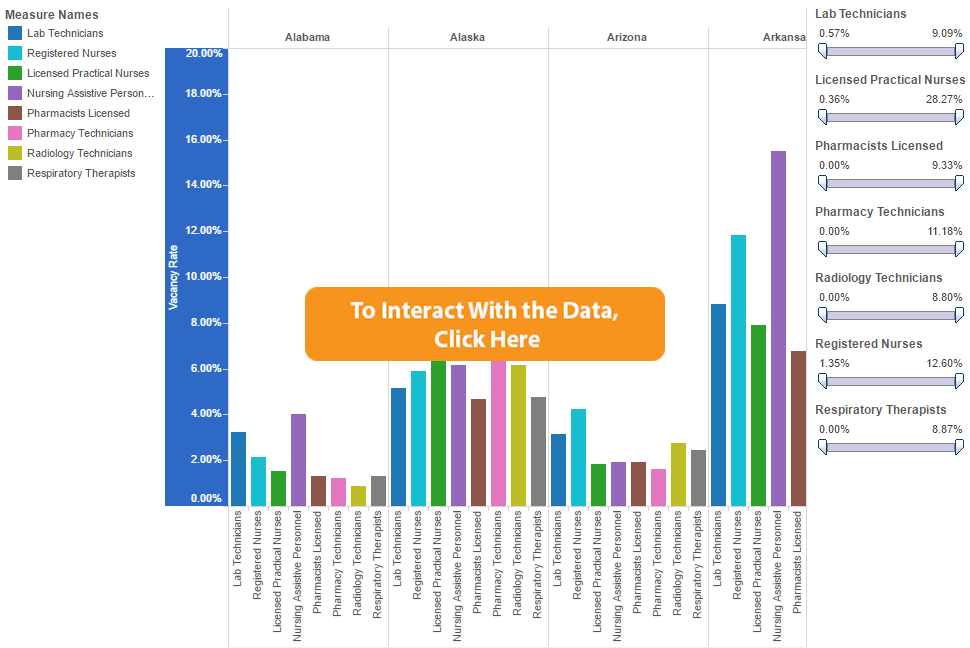


I created a spreadsheet using Public Insight that compares endowment dollars for the past five years and ranks by asset size, 1 year growth, 5 year growth, and endowment per student. You can download it here.

Share This Story

Similar Posts

  • Where the Vets Live

    As we approach this Memorial Day Weekend, we pause to remember the sacrifice made on our behalf by our veterans. Nationwide veterans comprise 8% of the population. But there are clusters of populations where veterans comprise much higher percentages of the population. This article from Trulia published in Forbes back…

  • Student Earnings Experience a Sluggish Recovery

    College students are earning 8% less in 2013 than in 2008 per the most recent data published by the US Department of Education College Scorecard database. Students earned $31,382 in 2013 compared to $34,119 in 2008. The earnings were ostensibly flat from 2012 earnings of $31,528.   The College Scorecard…

  • Infection Rates and the Long-Term View

    My Cleveland Indians have now won 13 games in a row. That along with their overall record and stellar play over the entire season tells me they are a good team. However, at any given point the Indians or any particular player could play really poorly. The similar challenge with…

  • Breaking Down Net Price, Tuition, and Aid

    Reports by College Board and others have indicated that net price, the true measure of what a student pays to attend college, continues to rise. College Board has maintained that the actual net price has been increasing for six to eight straight years.    Net price is defined as the…

  • New Data Highlights Student Loan Repayment Rates

    According to the Institute for College Access and Success, seven in 10 seniors (69%) who graduated from public and nonprofit colleges in 2014 had student loan debt, with an average of $28,950 per borrower. Over the last decade—from 2004 to 2014—the share of graduates with debt rose modestly (from 65%…

  • 12 Colleges with Sustained Enrollment Growth

      According to data collected from the Integrated Postsecondary Education Data System (IPEDS), 60.6% of colleges experienced flat or declining enrollment growth while only 39.4% experienced increasing enrollment growth from 2013-2014. This is also very consistent with statistics from 2012-2013.   College enrollment growth may be hard to sustain and…