Have Student Debt Repayment Rates Bottomed?

Student repayment rates continues to decline, although the trend seems to be slowing, according to the most recent College Scorecard data. This data measures repayment rates at 1,3,5, and 7 years. Repayment rates and default rates are very different. Repayment rates are the percentage of students who have made progress in paying them down (i.e. have paid down at least $1 in the initial balance of their loans) after entering repayment. Default rates measure the worst-case scenario for repayment outcomes and can be manipulated through deferments and forbearances. 


To create this composite picture, we took the average repayment rate by institution and multiplied it by the number of students being measured to come up with an institutional average and then aggregated the data by year. 


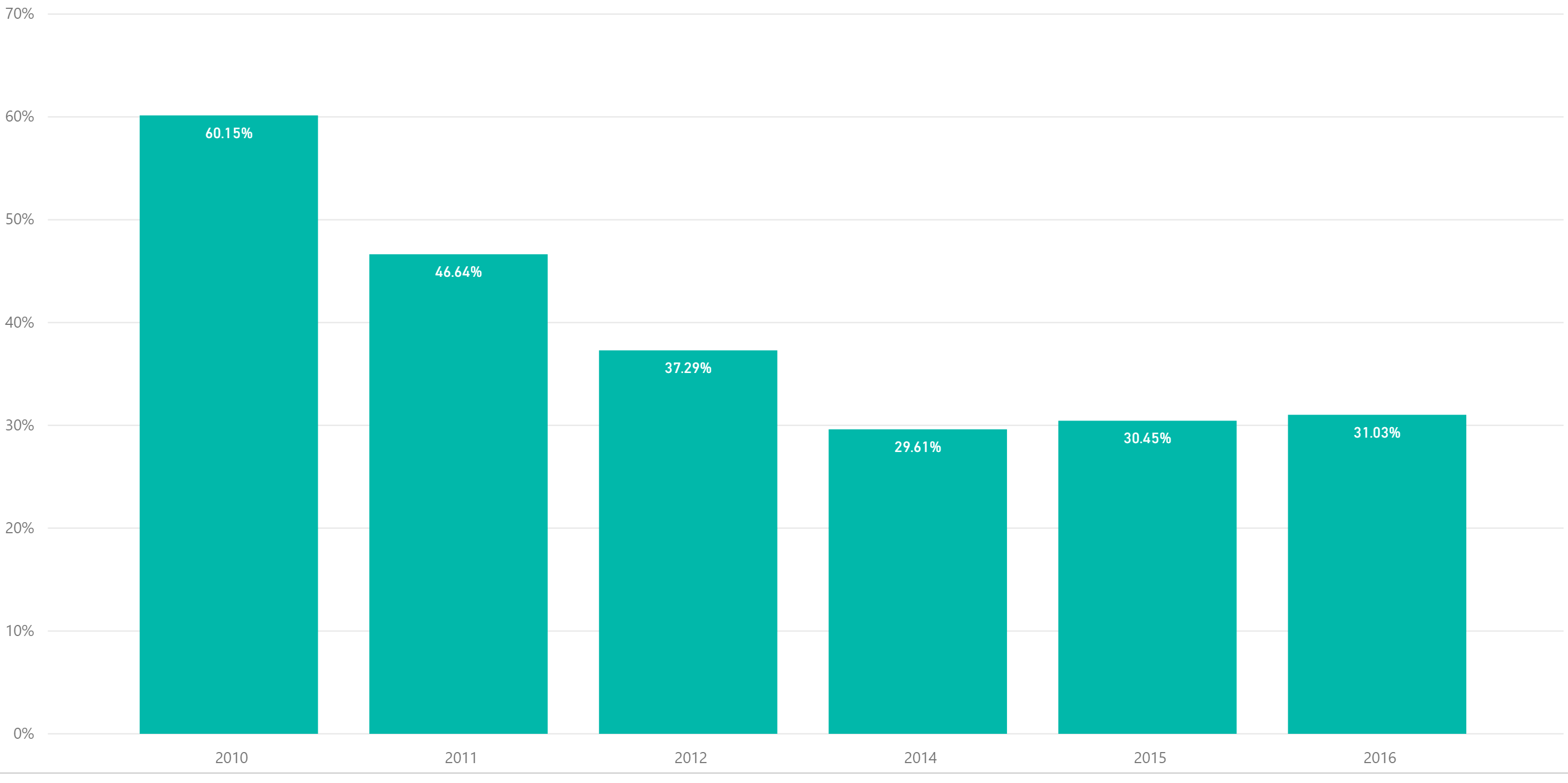
Three-Year Repayment Rates


 Five-Year Repayment Rates

Seven-Year Repayment Rates

The One-Year Repayment Rates were not updated and the last year we have is 2014. The Three-Year Repayment Rate has rebounded from 30.45% to 31.03% in 2016. The Five-Year Repayment Rate has declined from 38.55% to 36.42% and the Seven-Year Repayment Rate has declined from 53.23% to 46.28%. The trending graphs are shown below. Obviously the time horizon is the key. Those entering into repayment during the Great Recession continue to struggle to repay their debts whereas those entering into debt outside of the Great Recession seem to be doing better. On the other hand, we may be so accustomed to poor performance that we still accept that two out of three students do not pay their student debts down when they are due, even five years into the repayment cycle.

 

Share This Story

Similar Posts

  • International Student Enrollment Visualized

    In last week’s blog, we talked about out of state enrollment and its potential impact on both the diversity and finances of the university. International enrollment is even considered a bigger potential bonanza to colleges and universities as many international students pay full tuition. According to the Institute of International…

  • Regional Disparities in Health Insurance

    We all know that health insurance is a moving target. According to the most recent ACS survey data, the national uninsurance rate declined from 13.0% to 11.7% in 2016. Public insurance coverages increased slightly more than private coverages (increases of .9% and .6%) respectively. This change was short-lived as Gallup…

  • Will Voter Unpredictability Continue in 2018?

    Much has been written about the increased polarization of America and its collective impact on communities. There were many surprises in the 2016 election and people are bracing for a potentially tumultuous 2018 mid-term election. Ohio, where I live, is one of the swing states. The average county in Ohio…

  • Nursing Home Deficiencies by State

    When nursing home incidents occur, they receive big news. Just this week, a Pinellas Park, Florida nursing care center resident died after appearing to have been left outside in the sun. The nursing home had been cited for various deficiencies and had received a one-star rating. In fact, the nursing…

  • Infection Procedures Top Inpatient Volume Growth

    While Medicare inpatient procedure volume has remained flat since 2013, infections are a significant area of high volume change. The treemap below from the Inpatient Procedure Analysis Interactive shows the inpatient volume growth by procedure with color coding by volume change from 2013-2015 using the Medicare Provider and Analysis Review…

  • The 13 College Scorecard Title IV Outcomes

    Where Students Go Based on the Latest College Scorecard Data In our last post, we provided some insight into the IPEDS Outcome Measures data. The IPEDS Outcome Measures data was designed as a supplement to graduation rate data which has always been questioned as an effective measure for measuring student…